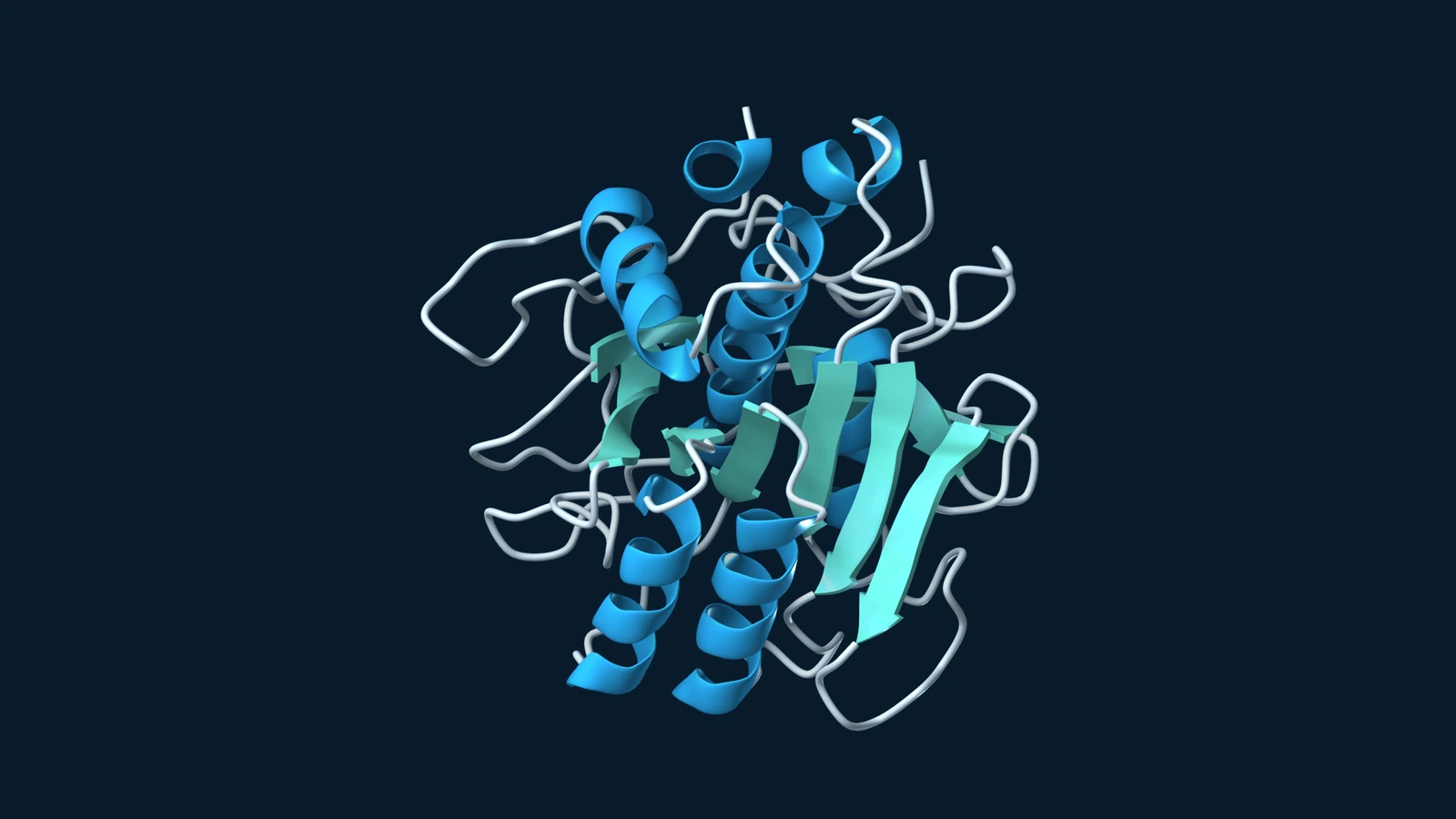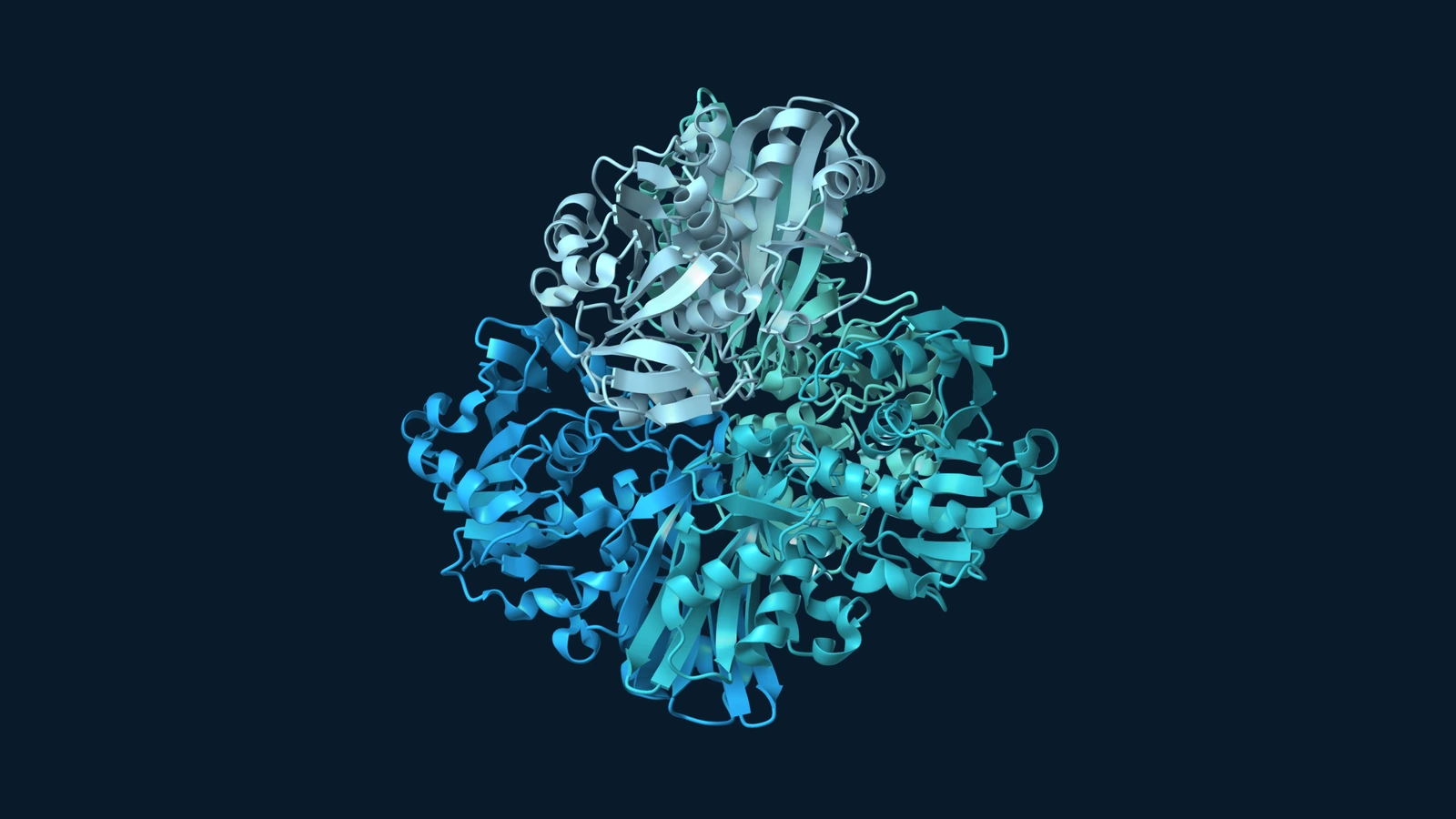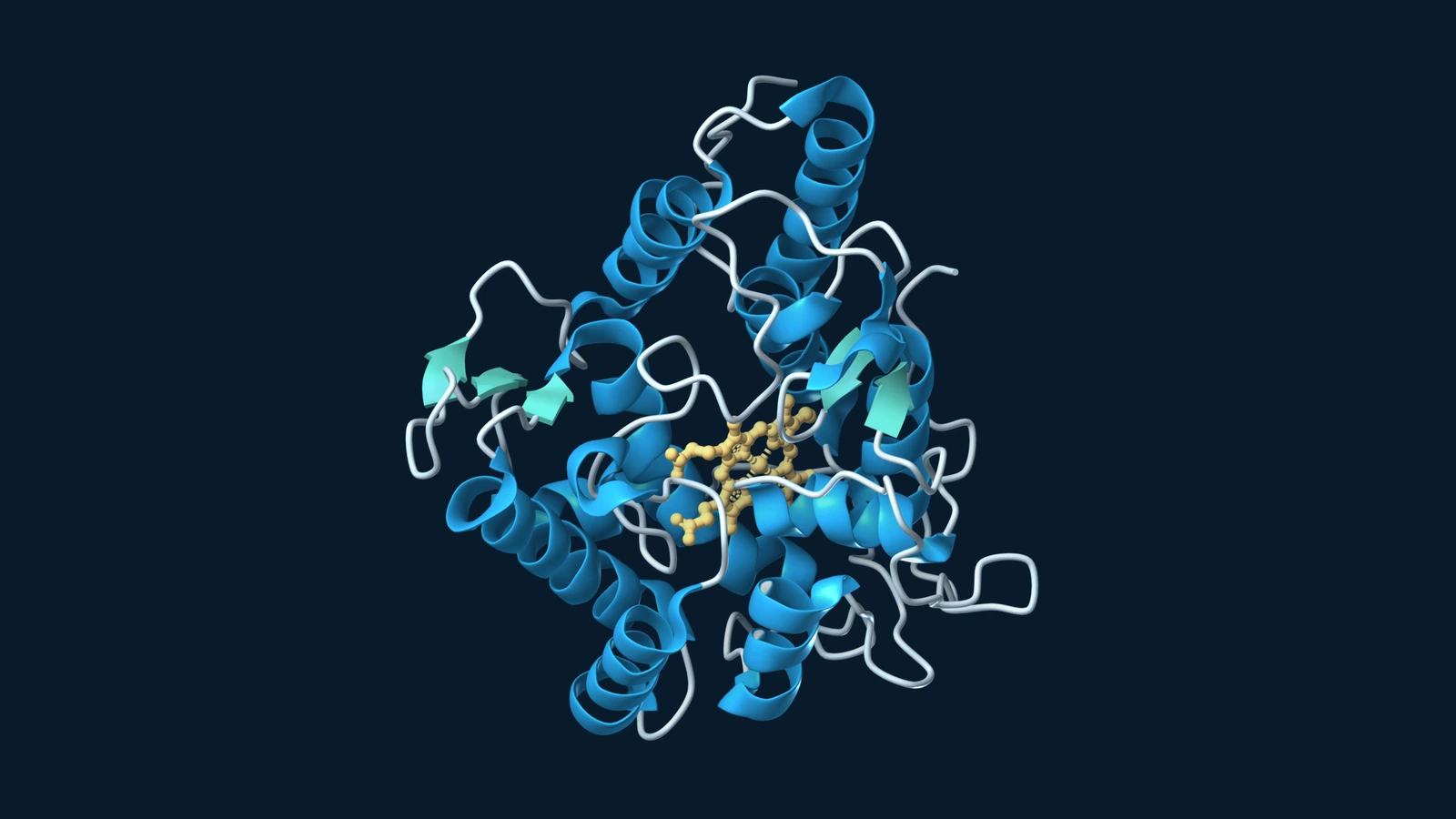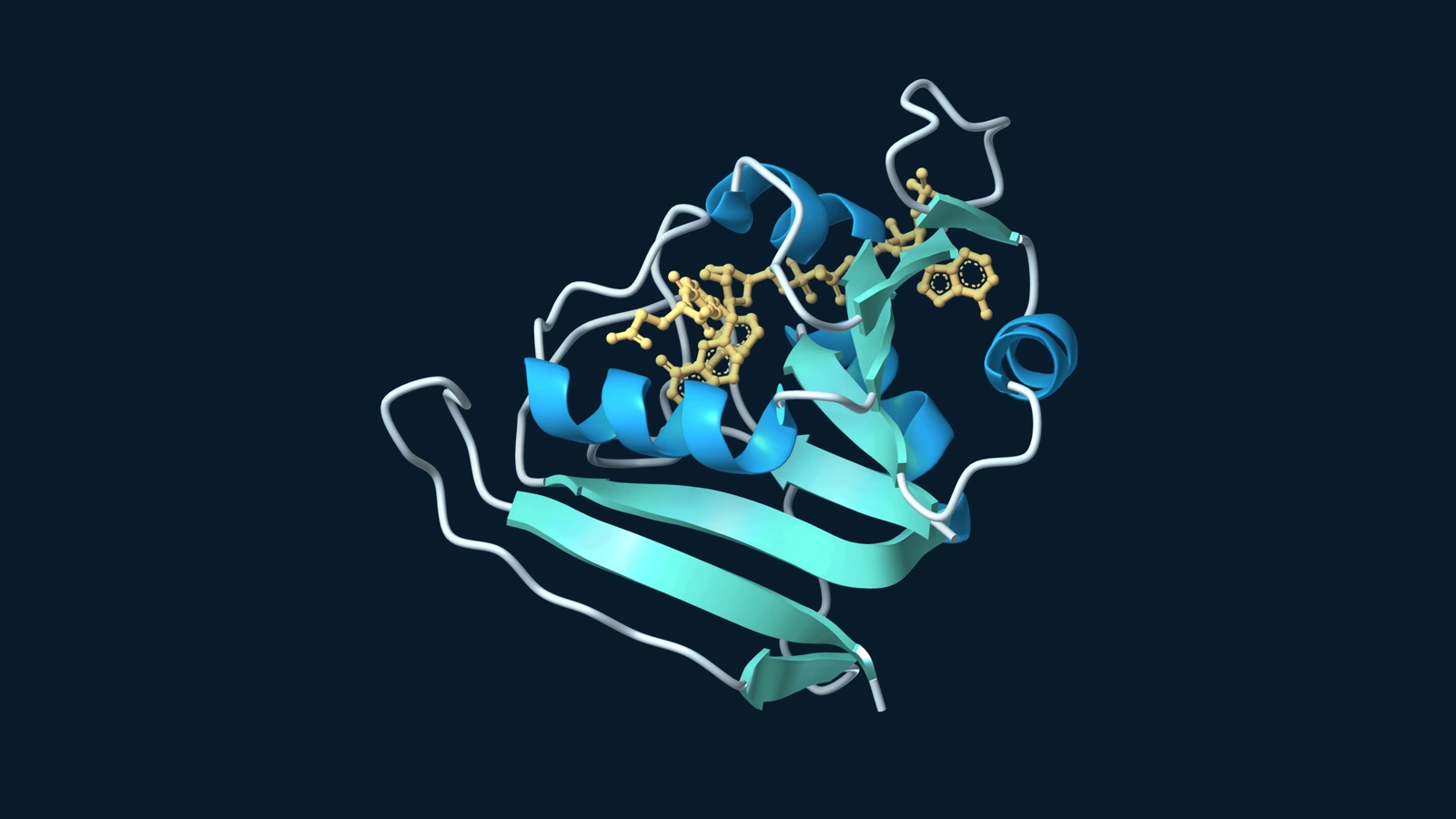
Choosing which mutation to test is one of the hardest parts of enzyme engineering. Even a modest protein has an enormous number of possible sequences, and a change that improves one property may weaken another. Generative AI offers a way to narrow that search by learning patterns in proteins that already exist.
A review by Wen Jun Xie and Arieh Warshel in National Science Review examines how those patterns can help researchers investigate enzyme activity, stability and evolution. Published in December 2023, it brings together work across the field rather than reporting a single new enzyme-design experiment.
Reading the patterns in protein sequences
Proteins are built from sequences of amino acids. Across related enzymes, some positions change frequently while others remain similar. Certain changes also tend to occur together, suggesting that the effect of one amino acid depends on the surrounding sequence.
Generative models learn aspects of these patterns and can propose new sequences or assign scores to existing ones. Protein language models treat amino acids as tokens, much as a text model processes words or parts of words. Other approaches discussed in the review include maximum-entropy models and variational autoencoders.
For enzyme engineering, the attraction is practical: a model may help rank candidate changes before researchers spend time making and testing them. A sequence that looks plausible to the model is a candidate for investigation, not a guaranteed working catalyst.
Activity and stability are different targets
An enzyme’s catalytic activity describes how it helps a chemical reaction proceed. Stability concerns whether it retains its structure under particular conditions. Both can matter in a process, but they are not interchangeable.
The review discusses work linking evolutionary sequence information to these properties. In examples involving dihydrofolate reductase, changes near the active centre were associated with catalytic effects, while changes elsewhere in the protein were more informative about thermal stability.
That pattern offers a useful hypothesis about where to look for mutations. It should not be turned into a universal rule that every active-site change improves catalysis or every distant change controls stability. Different enzymes, substrates and assay conditions can produce different outcomes.
What does an AI score actually measure?
Many datasets measure how well cells carrying a protein variant grow or survive. That is a useful biological readout, but it can reflect several factors at once, including enzyme activity, protein abundance and folding stability.
A model that predicts this combined fitness measure has therefore not necessarily predicted a reaction rate. Likewise, a likely sequence is not automatically the best enzyme for an industrial solvent or temperature that natural evolution never encountered.
The review also points to a persistent data problem: enzyme measurements made with different substrates, temperatures and pH values are difficult to compare. A numerical score becomes more useful when researchers know precisely what was measured and under which conditions.
The laboratory remains part of the design process
The strongest use of these models is to guide a testable question: which variants are worth making, and which property should be measured? Experiments can then reveal whether a proposed improvement survives expression, purification and testing under the intended conditions.
The review’s contribution is a framework for connecting evolutionary information with enzyme behaviour. It supports a more informed search for useful catalysts, while leaving validation central to the process.
For a concrete example of a trade-off that a design project must confront, see our report on a protease mutation that improves heat resistance while reducing activity.
Source
Xie, W. J. and Warshel, A. (2023). Harnessing generative AI to decode enzyme catalysis and evolution for enhanced engineering. National Science Review, 10(12), nwad331. Review article. Read the review, also available through PubMed Central. The source is published under CC BY 4.0; this article is an independently written summary.
Update note: This archived report retains its original publication date and URL. The revision identifies the source as a review and distinguishes model predictions from experimentally demonstrated enzyme performance. It is not a survey of all AI developments since 2024.