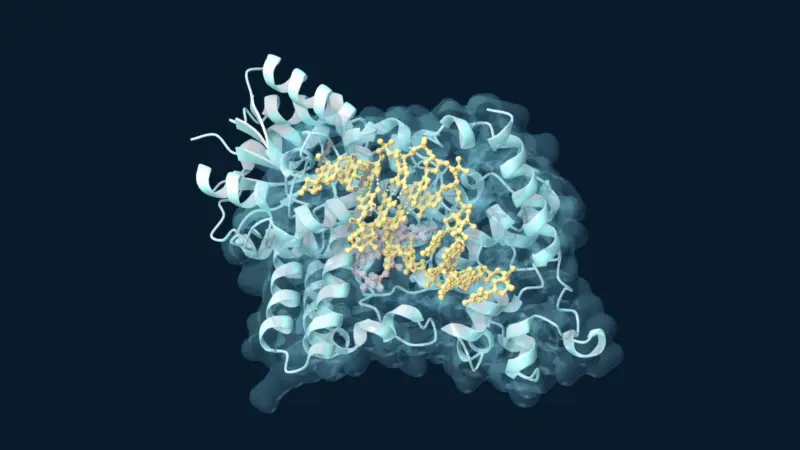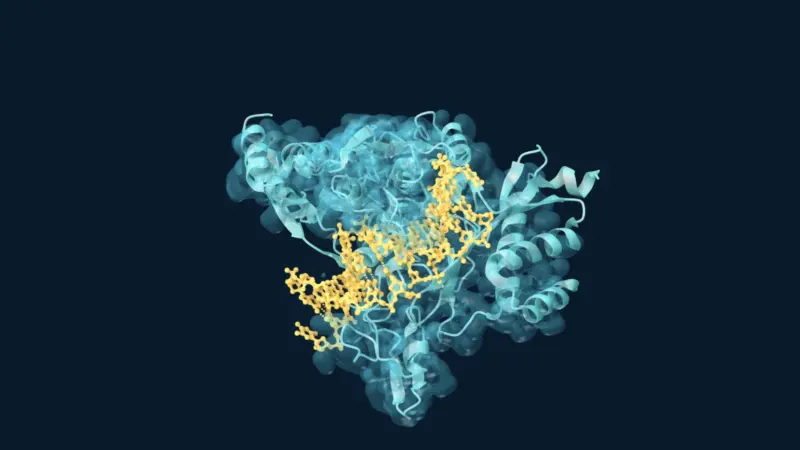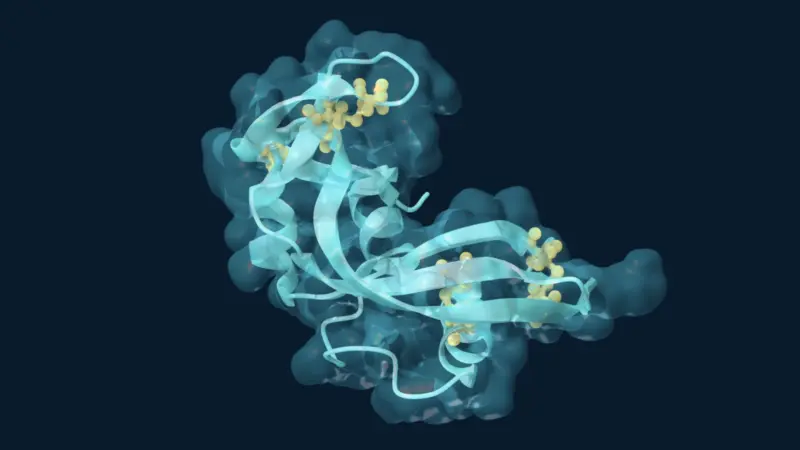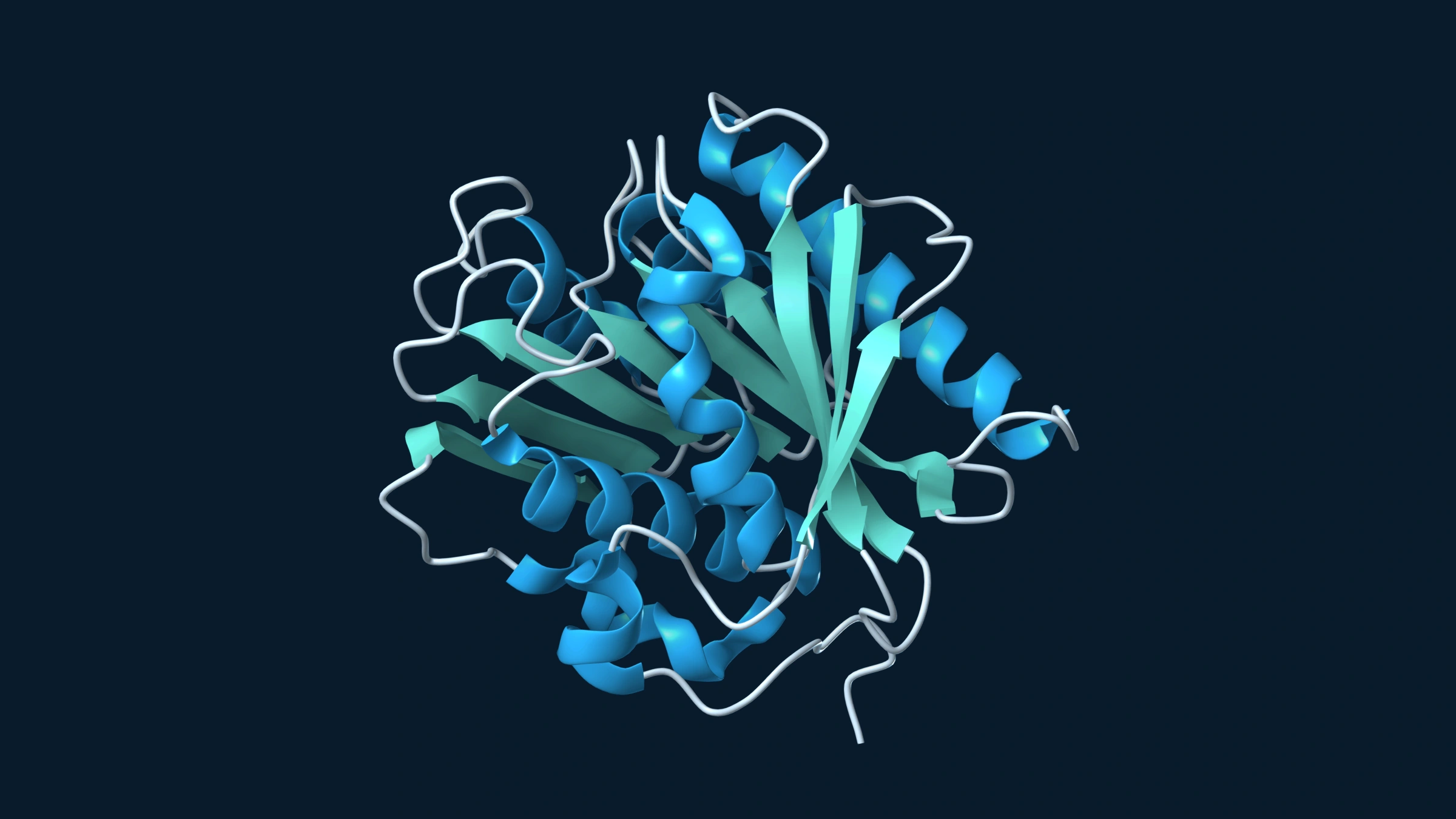
How does an enzyme’s performance change from one plastic to another? A new study in Biotechnology Journal, published in April 2024, compares four bacterial enzymes—DaPUase, IsPETase, PfPHOase and Se1JFR—across several polymers, revealing differences in their activity. Read the study.
Different plastics, different results
In laboratory tests with polymer powders, IsPETase and Se1JFR each caused more than 80% mass loss in polycaprolactone (PCL) after 24 hours. DaPUase and PfPHOase produced approximately 50% mass loss. Se1JFR also caused 23% mass loss in polybutylene succinate (PBS) and 19% in a polyether polyurethane.
For polyethylene terephthalate (PET), IsPETase released more measured soluble products than Se1JFR from both low-crystallinity and semicrystalline samples. Polylactic acid (PLA) showed only marginal mass loss, even where molecular-weight measurements indicated shorter polymer chains. These endpoints matter: chain shortening, material loss and recovered products describe different aspects of breakdown. Makryniotis and colleagues, 2024.
An enzyme needs access to chemical bonds it can cleave. In PET, ester bonds connect the building blocks of the polymer. Earlier structural work on IsPETase examined how its binding cleft accommodates a substrate and how changes to the enzyme can alter its activity. That work also highlighted the importance of the polymer’s physical structure: tightly packed crystalline regions can restrict access to the chains. Austin and colleagues, 2018.
Why the structure of the plastic matters
This makes “plastic-degrading enzyme” a starting description, rather than a guarantee of performance. A useful comparison must identify the material being tested and the outcome being measured. Results for a prepared powder cannot simply be treated as a prediction for an intact bottle or a mixed collection of discarded packaging.
Breakdown is one step toward recycling
For recycling, the next question is what can be recovered and reused. A decrease in a sample’s mass does not, by itself, demonstrate that its building blocks have been recovered in a form suitable for manufacturing another product.
Separate research has demonstrated that additional step for PET. In a 2020 Nature study, researchers engineered a PET-degrading enzyme, recovered building blocks from waste PET and used them to make new PET bottles. This provides a concrete example of recycling beyond an initial breakdown assay, although its enzyme, feedstock and processing conditions differed from those in the four-enzyme comparison. Tournier and colleagues, 2020.
The 2024 comparison tested individual enzymes, not a working mixed-waste recycling process. Its findings motivate further testing of enzyme combinations; they do not establish that such combinations will work. Makryniotis and colleagues, 2024.
Related reading: Waste to Wonder: Enzymes Making New from Old Plastic
References
- Makryniotis, K., Nikolaivits, E., Taxeidis, G., Nikodinovic-Runic, J., and Topakas, E. (2024). Exploring the substrate spectrum of phylogenetically distinct bacterial polyesterases. Biotechnology Journal, 19(4), e2400053. DOI: 10.1002/biot.202400053.
- Austin, H. P., et al. (2018). Characterization and engineering of a plastic-degrading aromatic polyesterase. Proceedings of the National Academy of Sciences, 115, E4350–E4357. DOI: 10.1073/pnas.1718804115.
- Tournier, V., et al. (2020). An engineered PET depolymerase to break down and recycle plastic bottles. Nature, 580, 216–219. DOI: 10.1038/s41586-020-2149-4.
- Sehnal, D., et al. (2021). Mol* Viewer: modern web app for 3D visualization and analysis of large biomolecular structures. Nucleic Acids Research, 49, W431–W437. DOI: 10.1093/nar/gkab314. Visualization software used for the accompanying image; structure: RCSB PDB 6EQH.