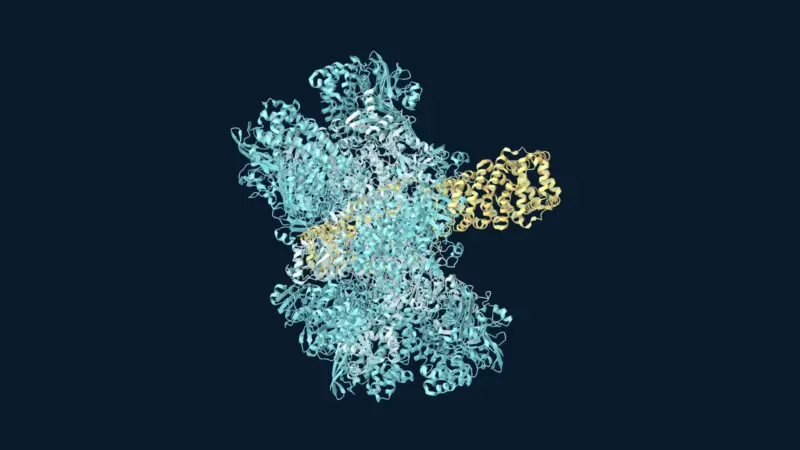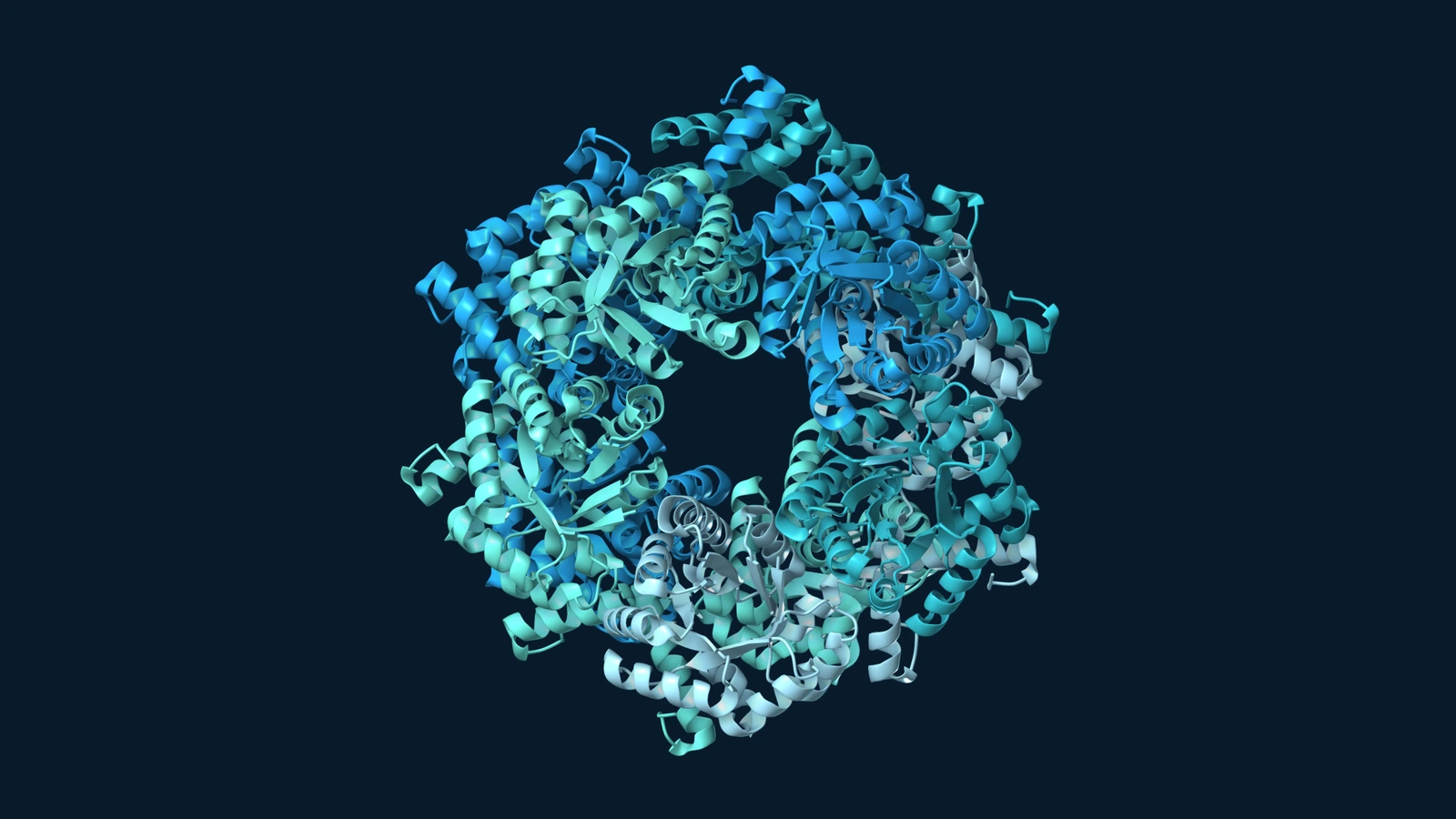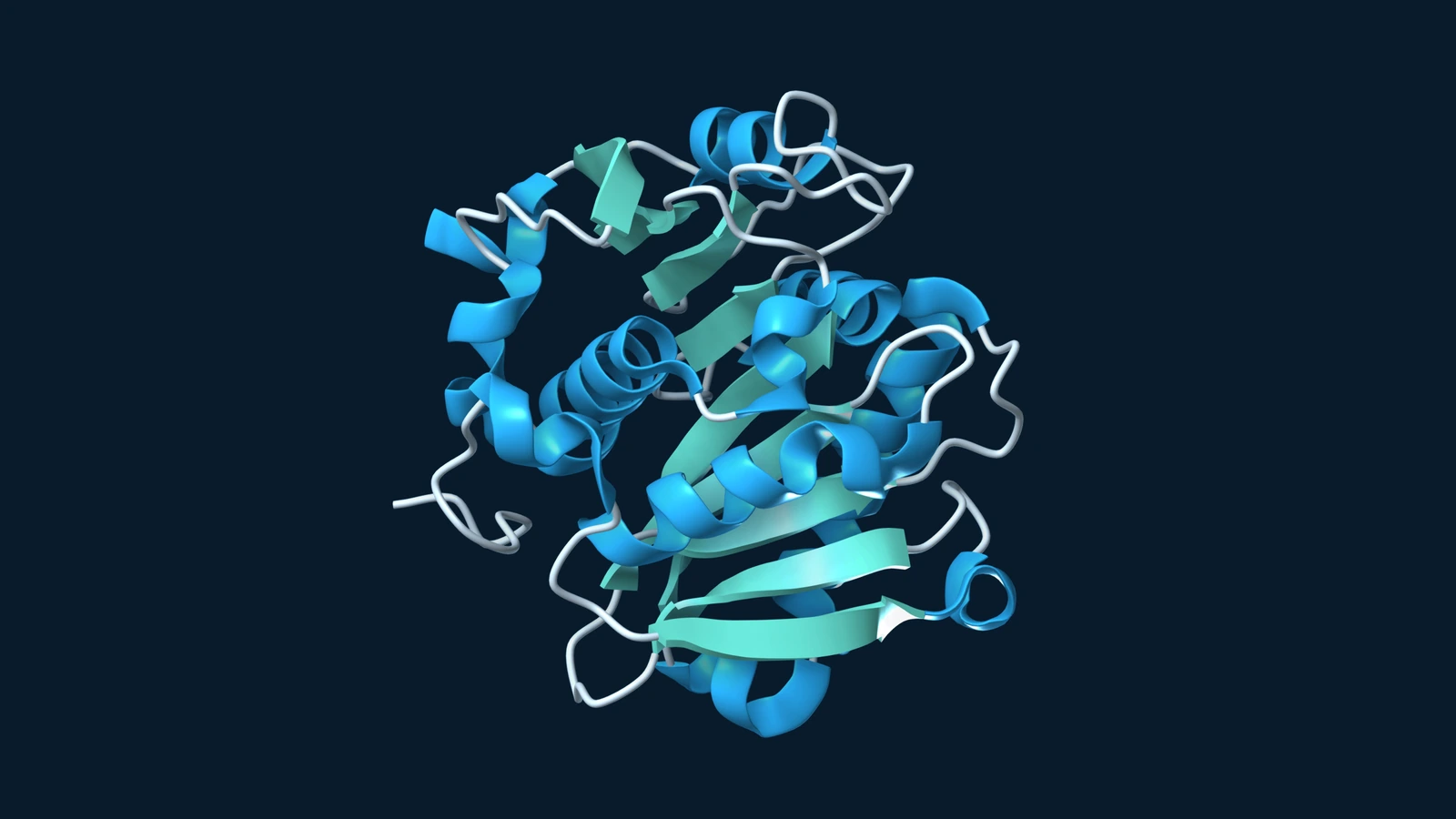
A microbe from a deep-sea hydrothermal vent can make usable nitrogen at 92 °C. That result, reported by Mausmi Mehta and John Baross in 2006, posed a molecular question. What kind of enzyme can work on nitrogen gas at a temperature that would unfold many familiar proteins?
Cells need nitrogen to make proteins and DNA. Nitrogen gas is plentiful, but its two atoms share a strong triple bond. Only certain microbes can use the gas directly. Their enzyme system, nitrogenase, spends energy from ATP and delivers electrons to a metal cluster. There the gas can be reduced to ammonia, which cells can use to build larger molecules.
Three temperatures tell three different stories
In 2026, Nevena Maslać and colleagues isolated the nitrogenase of Methanocaldococcus infernus. At room temperature, their assay could detect no ammonia production. At 50 °C it could. The researchers stopped there because the equipment for replenishing ATP in the assay relied on another enzyme system with its own temperature limit.
The 92 °C result belongs to the living microbe. A separate measurement on the isolated nitrogenase showed that its catalytic component stayed folded until close to the boiling point of water. These findings answer different questions: how hot the organism can fix nitrogen, how warm the laboratory reaction could be run, and how much heat the protein structure can withstand.
A sulfur atom changes seats
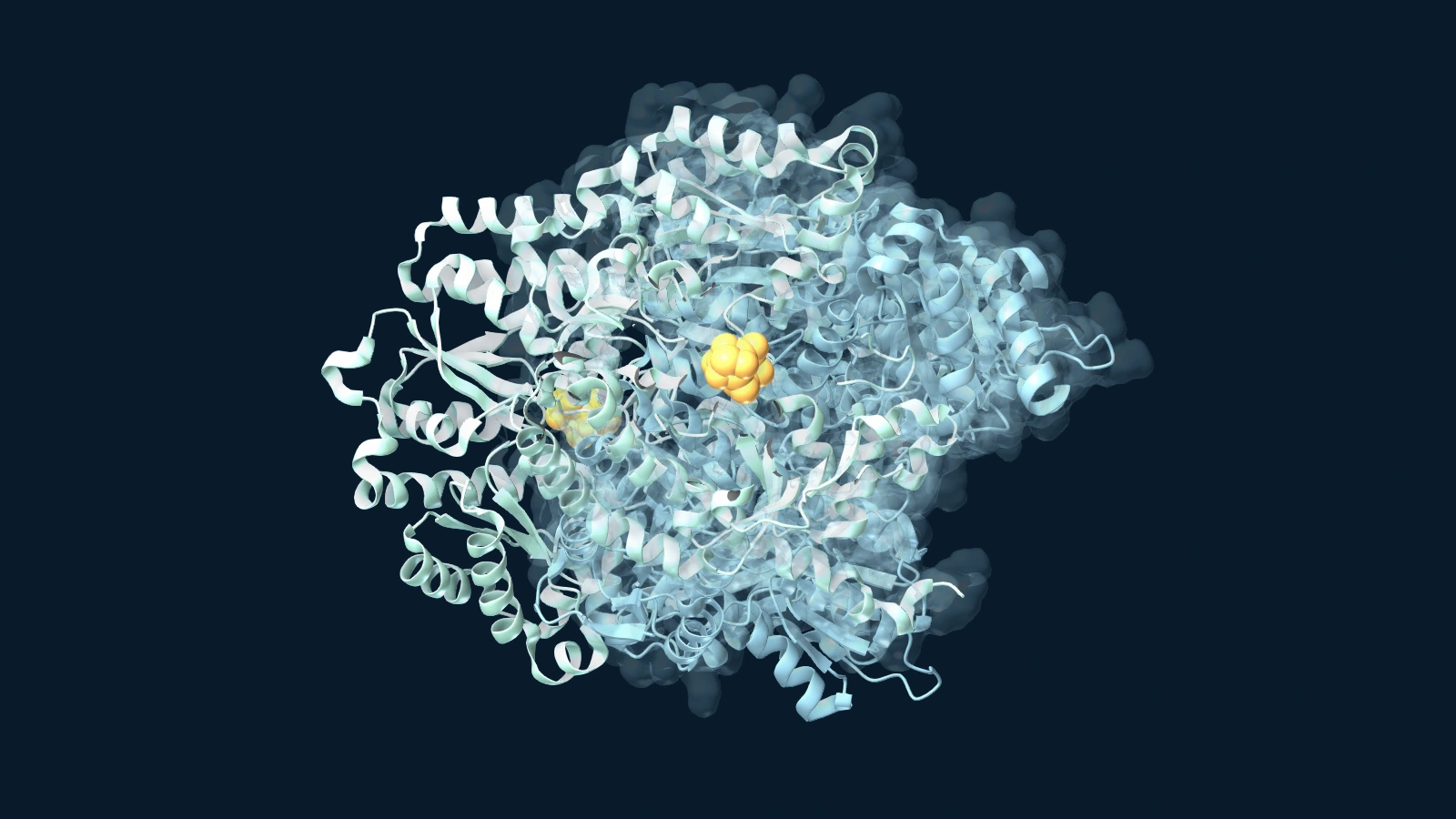
Two crystal forms gave the team a closer look at the catalyst. In the first, a sulfur atom occupied its usual bridging position in the iron–molybdenum cluster. In the second, the experimental data fit a mixture of two arrangements. In one of them, that sulfur sat nearby and another atom occupied a position between two irons. Even in the sharper, 1.21 Å structure, the team could not identify that atom.
Similar rearrangements had been seen in nitrogenases that use vanadium or iron in place of molybdenum. Finding one in this molybdenum enzyme gives the three families a point of comparison. A shared structural change is a clue to how the catalyst makes room for chemistry. The identity of what occupies that room, and the instant at which nitrogen’s triple bond gives way, remain open questions.
Sources
- Maslać N, Törer MR, Bolte P and Wagner T (2026). Molecular basis of N₂ fixation in a hyperthermophilic archaeon. Nature Communications.
- PDB 9SPZ (resting form A) and PDB 9SQ3 (mixed-state form B). Experimental structures from the Maslać study.
- Mehta MP and Baross JA (2006). Nitrogen fixation at 92°C by a hydrothermal vent archaeon. Science.