An experimental acne vaccine reduced skin inflammation in mice by targeting an enzyme made by certain strains of Cutibacterium acnes. The bacterium commonly lives on human skin, but its effects can depend on the strain and the molecules it produces. In a study published in Nature Communications on 5 December 2023, Irshad A. Hajam and colleagues traced part of that difference to two related enzymes, then tested ways to block the more inflammatory one. Original study.
Why the same bacterium can behave differently
The researchers focused on HylA and HylB, enzymes that break down hyaluronic acid: a long sugar molecule found in the material surrounding skin cells. HylA was associated with acne-linked bacterial strains, while HylB occurred in strains associated with healthy skin.
The two enzymes produced different mixtures of breakdown products. HylB rapidly reduced hyaluronic acid to two-sugar units. HylA left a mixture that included larger fragments, which stimulated inflammatory signals in cell experiments. Experiments in mice also implicated the immune receptor TLR2 in the inflammatory response associated with HylA.
Deleting the gene for HylA from an acne-associated strain reduced skin disease scores and inflammatory signals in the mouse model. Deleting the HylB gene from a health-associated strain produced a modest increase in inflammation. These results supported different roles for the two enzymes under the tested conditions. Study results, Figures 1, 2 and 5.
Small structural differences change enzyme behaviour
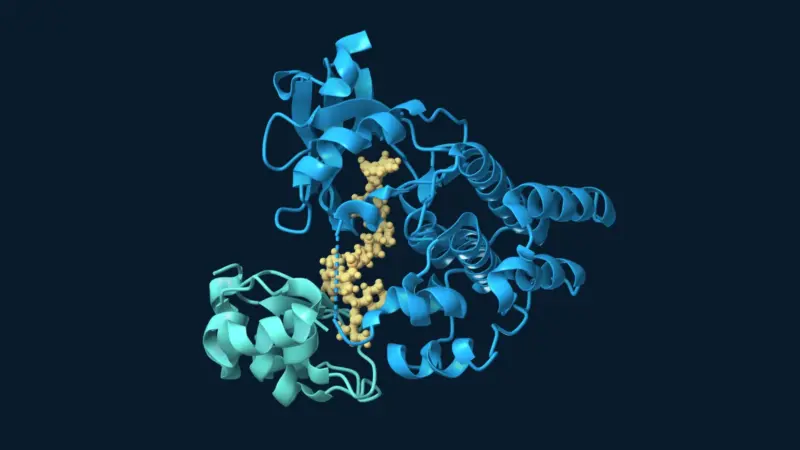
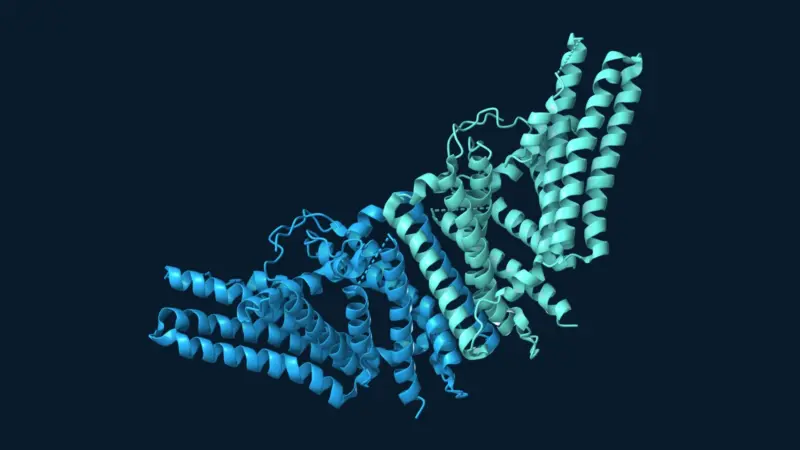
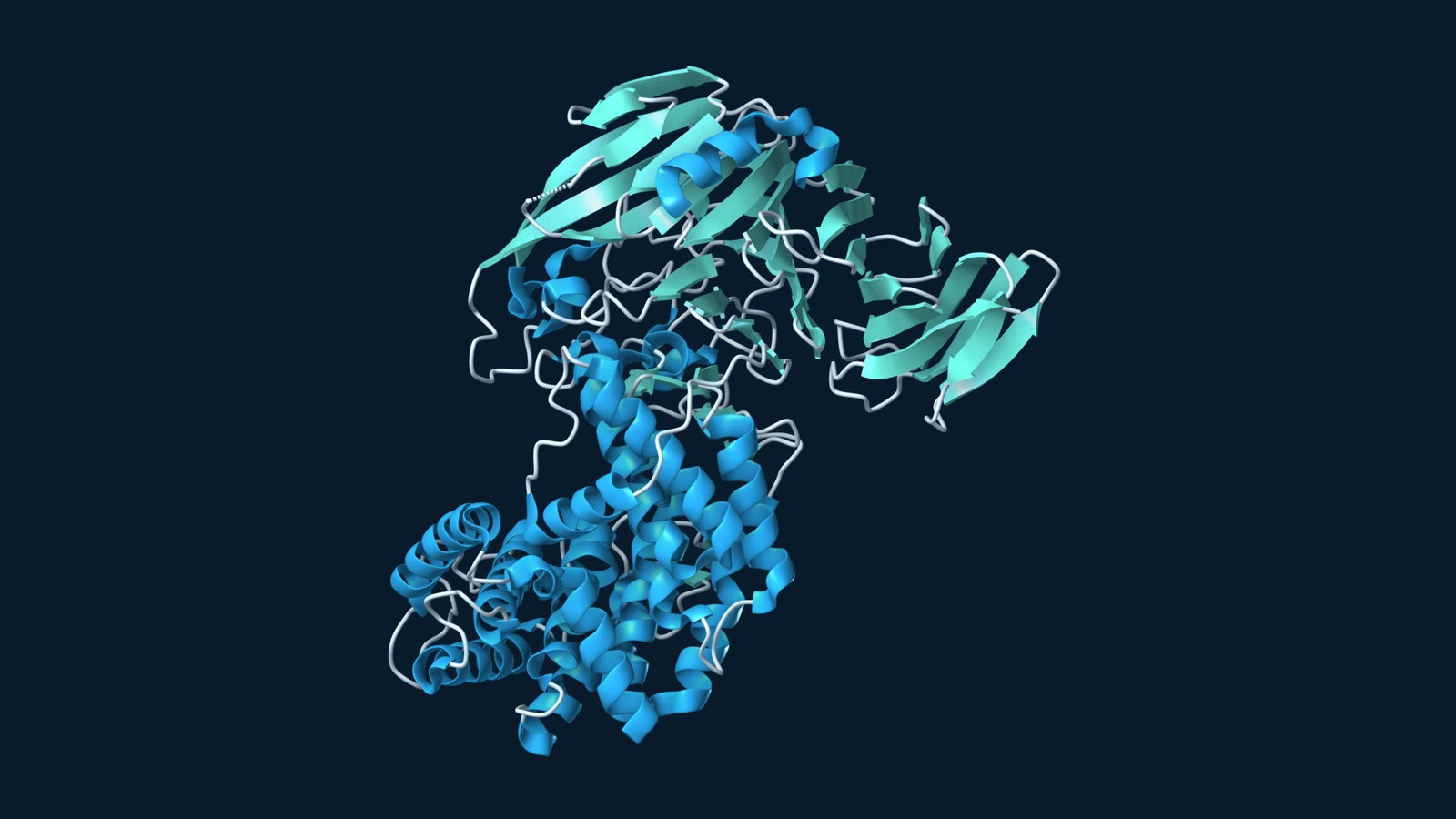
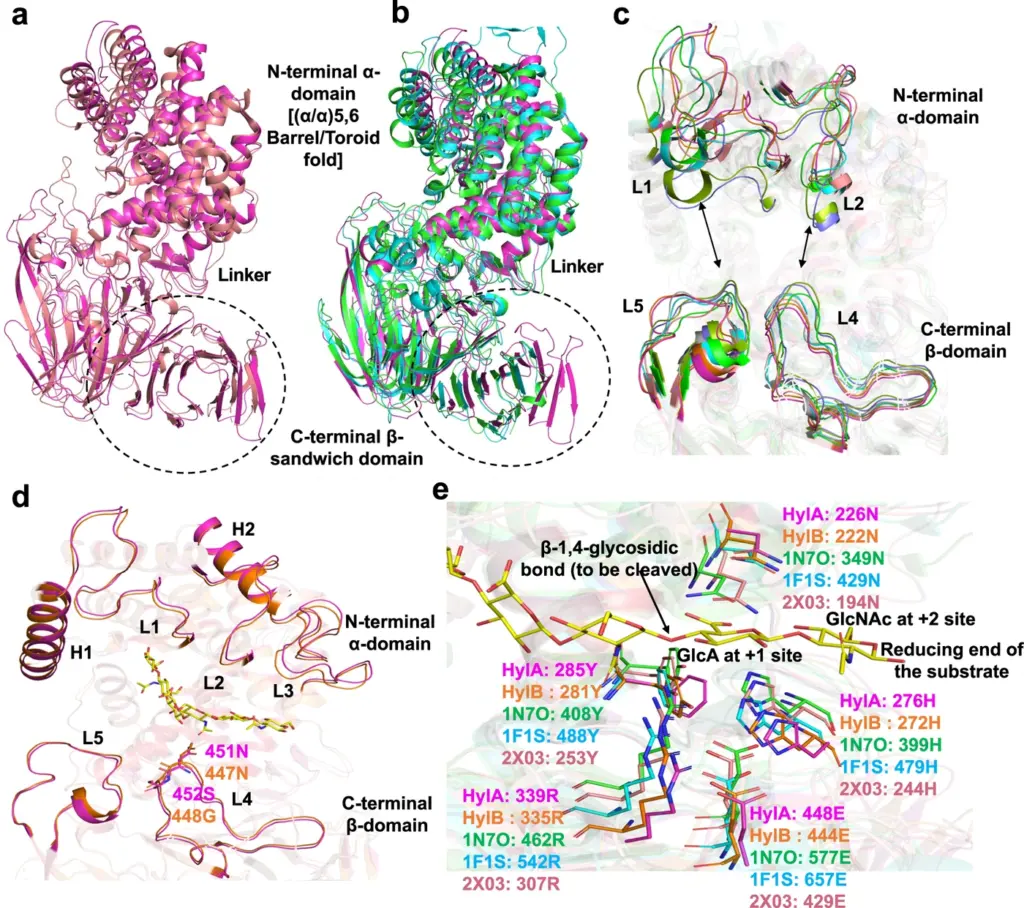
X-ray crystallography showed that HylA and HylB have closely related structures, including a cleft where hyaluronic acid is broken down. Structural and sequence comparisons were consistent with the enzymes sharing an origin within the Cutibacterium lineage, although the authors noted that further genetic evidence was needed to resolve their history.
Replacing one amino acid in HylA—serine at position 452—with glycine increased its activity and changed the sizes of its products. The altered enzyme behaved partly like HylB, but still produced a different mixture. It was an intermediate result, rather than a complete conversion into HylB. The experiment did not demonstrate that this substitution alone prevented skin inflammation. Structural and mutation experiments.
Making the vaccine more selective
The resemblance between the enzymes presented a practical problem. Vaccination with the whole HylA protein generated antibodies that also reacted with HylB. Although this reduced disease caused by an acne-associated strain in mice, it modestly worsened disease scores after challenge with a health-associated strain.
The team therefore designed a vaccine containing selected HylA fragments, attached to a tetanus-derived carrier protein. This formulation aimed the immune response more specifically at HylA. Vaccinated mice had lower skin disease scores and levels of the inflammatory signal IL-1β after challenge with an acne-associated strain. The main comparison included 15 mice per group, with measurements taken two days after bacterial challenge.
Tests against the health-associated strain provided evidence of improved selectivity. They did not establish that vaccination would leave the entire human skin microbiome unchanged. The vaccine experiments also involved immunisation before bacterial challenge, so they did not show that the approach could treat established acne in patients. Vaccination experiments, Figure 6.
Blocking HylA without vaccination
The researchers also developed short peptide inhibitors, including one called i932, that interfered with HylA activity. Co-injecting an inhibitor with the acne-associated bacteria reduced inflammation in mice. This offered another experimental route to the same target, although it did not establish how an inhibitor would perform as a cream or as treatment after acne had developed. Inhibitor experiments.
What remains to be established
The work connects a bacterial enzyme’s structure and breakdown products with inflammation, making HylA a candidate for further therapeutic research. However, the authors acknowledged that their mouse model could not fully reproduce human acne. Human efficacy, safety and lasting effects on the skin’s microbial community were not established by this study.
The finding also illustrates why targeting a particular microbial activity can be more complicated than targeting a species: closely related enzymes can have different effects, and a treatment must distinguish between them.
Related reading: Nanozyme Helps Collagen Resist Enzymatic Breakdown.
Update note, 21 September 2026: This archived report was revised to identify the mouse experiments, distinguish the tested vaccine designs, clarify the partial effect of the HylA mutation, and remove unsupported claims about human treatment and protection of the whole skin microbiome.
Reference
- Hajam, I. A., Katiki, M., McNally, R., et al. (2023). Functional divergence of a bacterial enzyme promotes healthy or acneic skin. Nature Communications, 14, 8061. DOI: 10.1038/s41467-023-43833-8. Open-access full text.