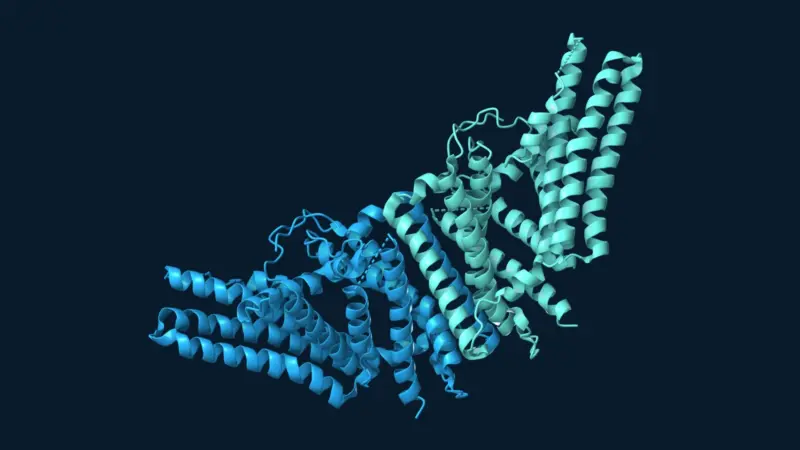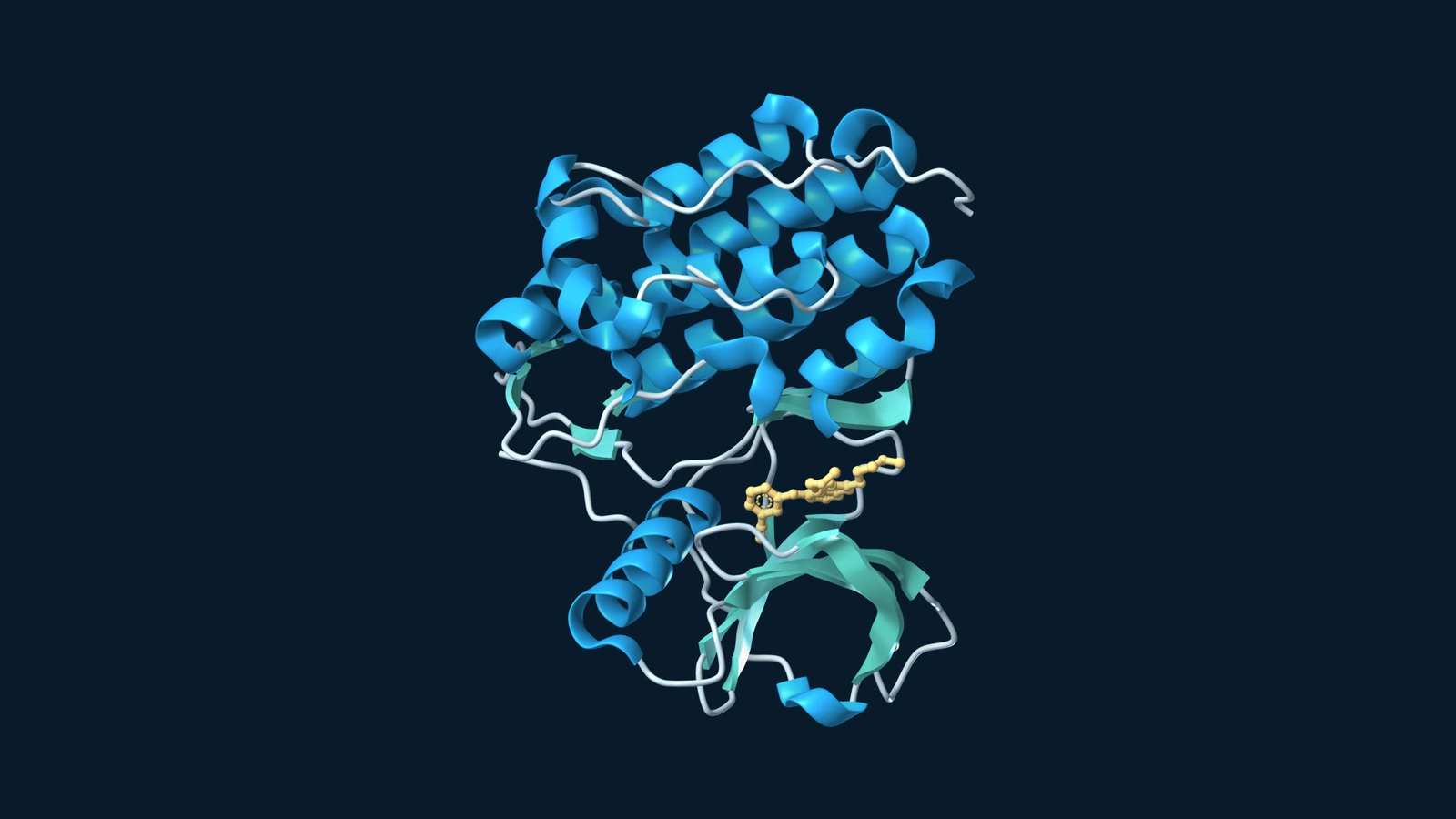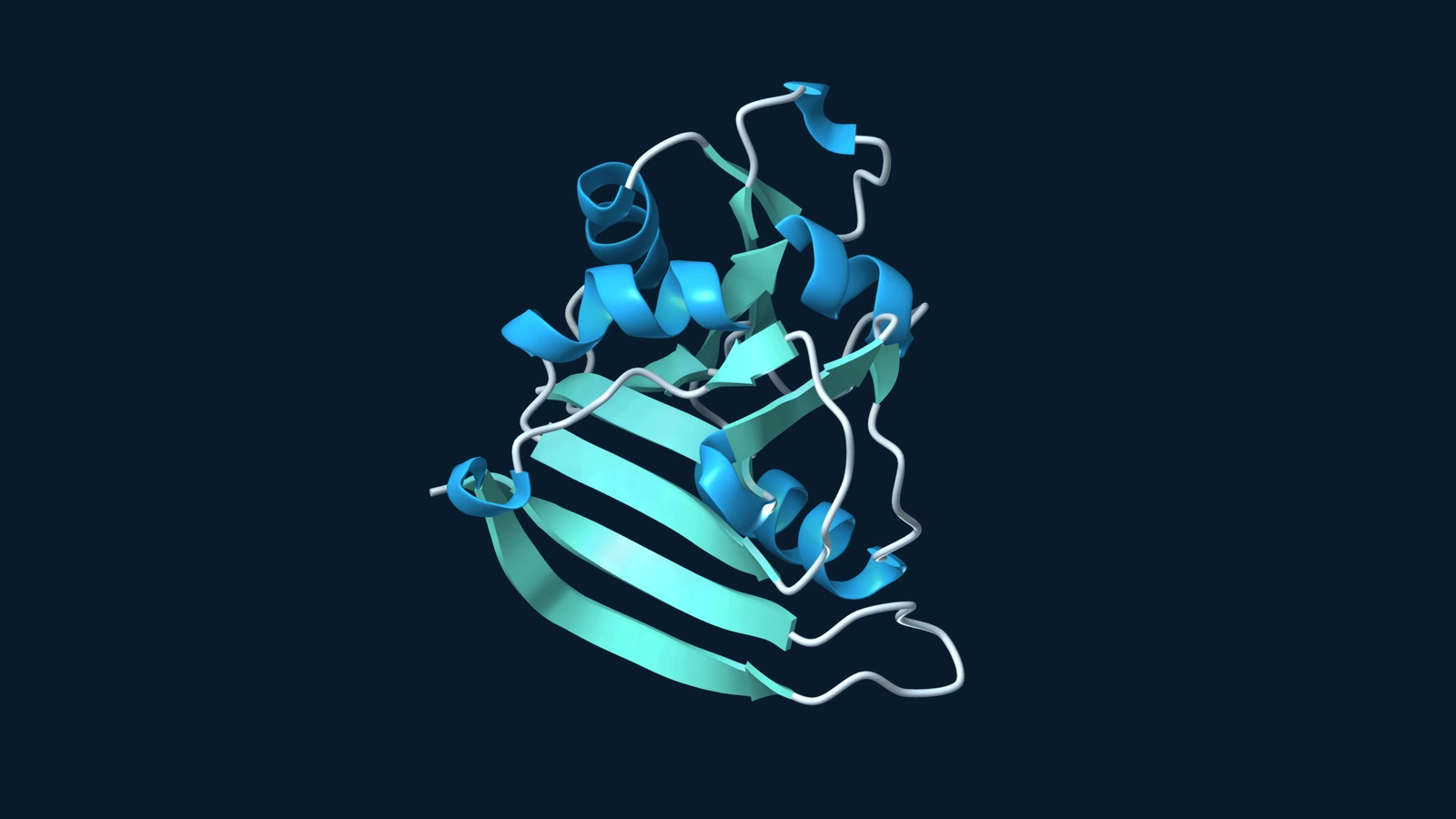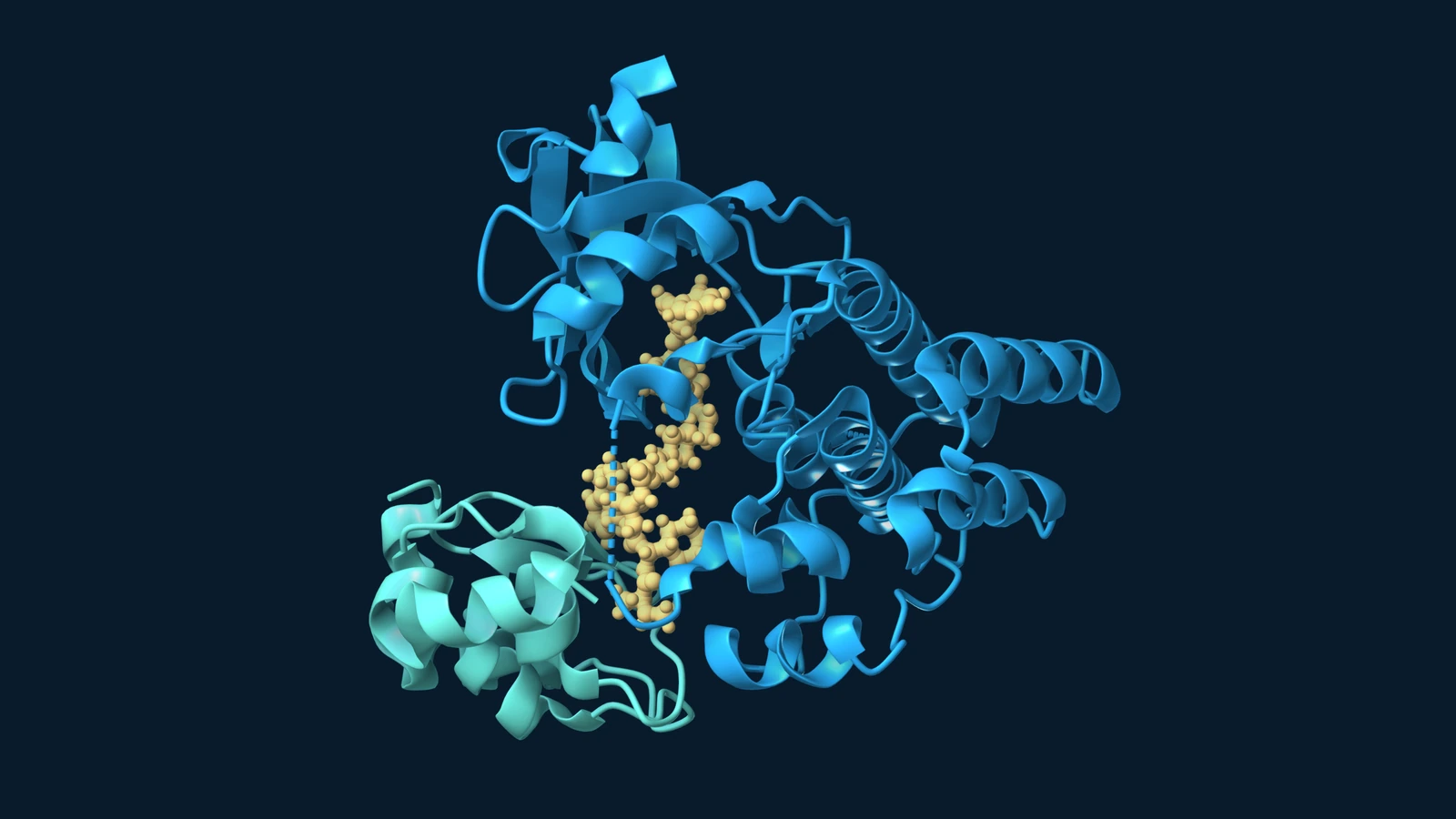
Some cancer medicines work by blocking proteins that help a tumour grow. Researchers are also exploring another approach: getting cells to break down those proteins and remove them.
A new study tests a molecule that does this while staying permanently attached to its target. The finding adds to evidence that such a firm grip can still allow the cell’s disposal machinery to do its job.
The enzyme behind the story
The cancer target in this case is an enzyme called BTK. Enzymes speed up chemical reactions; BTK helps pass signals inside certain immune cells. Those signals are useful in healthy cells, but they can also support some blood cancers.
Blocking BTK’s activity is one way to interfere with those signals. Removing the enzyme offers a different possibility: the cell loses the protein itself, rather than just having its activity restrained while a drug is attached.
Putting a protein on the disposal list
Cells already have machinery for breaking down proteins. Researchers can take advantage of it by designing a molecule with two jobs. One part catches the chosen protein; the other brings it close to machinery that adds a chemical tag for disposal.
The cell can then dismantle the tagged protein. These two-part molecules are known as PROTACs. The term describes a design strategy, rather than a single medicine.
Often, the aim is for one molecule to help remove several copies of a protein, letting go after each round. A permanent chemical bond prevents that reuse. Scientists therefore want to know how effectively a molecule can work when it stays attached to its first target.
A strong grip, with a weakness
Ran Cheng and colleagues studied a molecule called PSIRC3. In a laboratory test measuring BTK after 24 hours, it reduced the amount of the enzyme by up to 85%. The results appeared in Nature Communications on 7 October.
A comparison molecule that could not form the same permanent bond had little effect on enzyme removal. Changing one of BTK’s building blocks also stopped PSIRC3 from working. That points to a weakness in this design: it depends on a particular attachment point.
These measurements concern protein removal. They do not establish that the molecule can treat cancer in people.
One piece of a bigger drug-design problem
Permanent attachment is not a completely new route to protein removal. A 2023 study had already demonstrated that it could work for BTK. The new paper adds another example and examines the conditions that make it effective.
Getting a strong grip is also only part of the challenge. Earlier research on BTK showed why getting enough of these relatively large molecules inside cells matters. A compound cannot act on an enzyme it cannot reach.
For readers following drug research, this is a stage worth distinguishing from clinical testing. Our report on an experimental drug aimed at slowing lung scarring discusses testing in people. Here, the main contribution is evidence about how a molecule can work, with patient benefit still unproven.
A closer look at the experiment
PSIRC3 recruits cereblon, part of the cell’s protein-tagging machinery. In BTK-HiBiT Ramos cells, its reported DC50—a measure of degradation potency—was 0.75 nanomolar after 24 hours. The disabling change to BTK is called C481S: one amino acid, a protein building block, is replaced by another at position 481.
The paper has passed peer review and was released before final production editing. An earlier version was posted in February 2026; the new event is its journal publication.
Primary research
- Cheng et al. (2026). Sub-stoichiometric degradation is dispensable for potent PROTACs as demonstrated by irreversible covalent BTK degraders. Nature Communications. Published 7 October.
- Guo et al. (2020). Enhancing intracellular accumulation and target engagement of PROTACs with reversible covalent chemistry. Nature Communications.
- Schiemer et al. (2023). A covalent BTK ternary complex compatible with targeted protein degradation. Nature Communications.