Take a million molecules of ordinary air and, on average, you would not even have one whole molecule of hydrogen gas among them. Yet some soil bacteria harvest energy from that trace gas. How does an enzyme called Huc hydrogenase catch enough hydrogen to matter?
Part of the answer is that the bacterium is not making its entire living this way. Molecular hydrogen, H₂, supplies electrons. It does not supply carbon to build a cell. In lean conditions, though, an extra source of energy can help keep a cell alive. A soil bacterium called Mycobacterium smegmatis offered researchers a way to ask where those electrons go and what machinery makes the trick possible.
First, prove the gas is disappearing
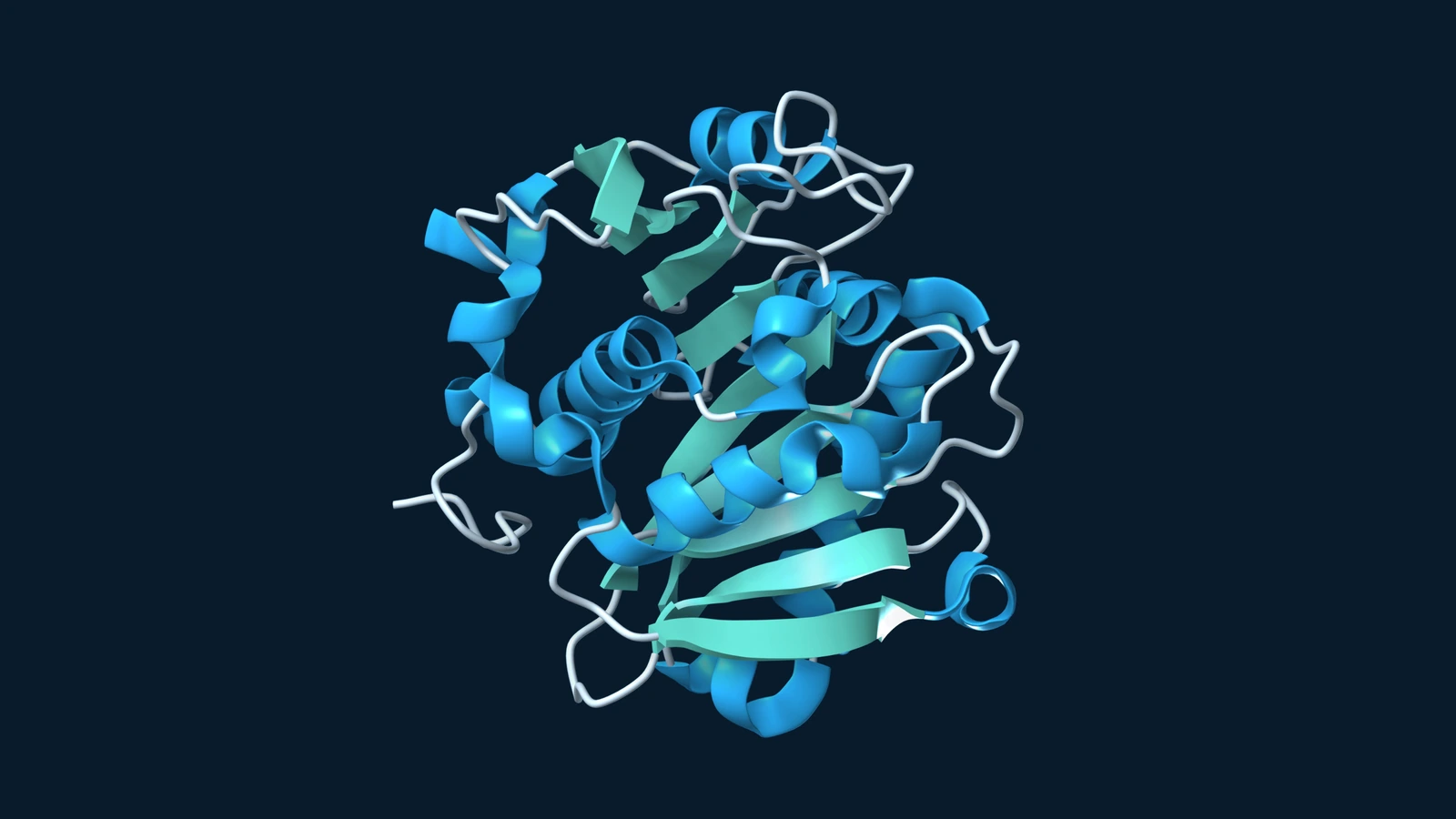
Gas consumption is a difficult claim to establish when there is almost no gas to begin with. In the bacterial uptake experiments, reported in 2014, researchers tracked tiny changes in hydrogen concentration by gas chromatography. They compared ordinary bacteria with strains lacking particular hydrogenases, the enzymes that handle hydrogen. This allowed them to connect a measurement in the gas above the cells with the proteins present in those cells.
Two different hydrogenases contributed to uptake. The bacteria could lower the concentration below the level normally found in the atmosphere. That matters more than simply showing that cultures consume hydrogen when supplied with a tankful: the ecological question concerns the last traces, not what the cell can do when fuel is plentiful. In the growth and survival study, removing hydrogenases also changed how well bacteria fared when other resources were scarce. The gas was doing something useful for the organism.
One might imagine that a protein capable of exploiting such a dilute fuel must produce a great deal of energy. That does not follow. Being able to work at low concentrations is different from having a large supply. There are only so many hydrogen molecules to be collected from any volume of passing air. A modest supply of electrons that helps a near-dormant microbe meet its bills need not be able to sustain rapid growth.
How Huc hydrogenase finds hydrogen amid oxygen
Air sets another trap. The atmosphere contains roughly 530 parts per billion of hydrogen by volume, against about 21 per cent oxygen. Oxygen can interfere with the metal centres of many hydrogenases. The enzyme has to admit a rare guest while surrounded by another gas that can stop the reaction.
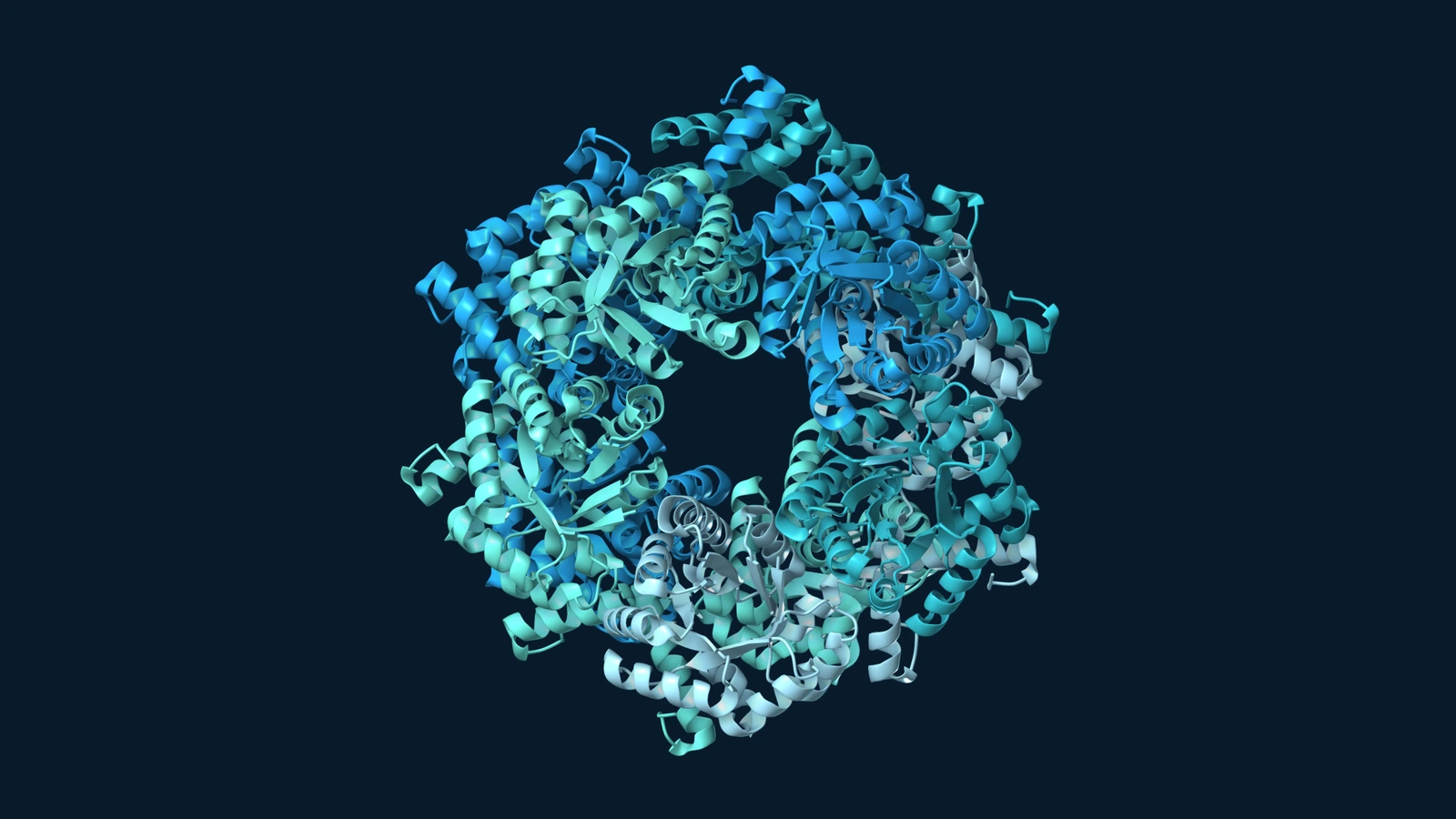
In 2023, Rhys Grinter, Ashleigh Kropp and colleagues isolated one of the bacterium’s two uptake hydrogenases, Huc. In the purified-enzyme study, it consumed hydrogen even at below-atmospheric concentrations and remained active in the presence of oxygen. Isolating it was the crucial test. The effect did not require an intact cell somehow concentrating the gas before a conventional hydrogenase got to work.
Cryo-electron microscopy revealed a catalytic site containing nickel and iron, connected to the protein exterior by narrow passages. A passage visible in a structural model is not a recording of molecules travelling through it. The group therefore also simulated gases moving in the protein. Their results suggest that a particularly tight section near the active site favours the passage of hydrogen over oxygen. It is evidence for selective access, not a claim that the structure forms a perfect oxygen-proof seal.
A second journey, this time for electrons
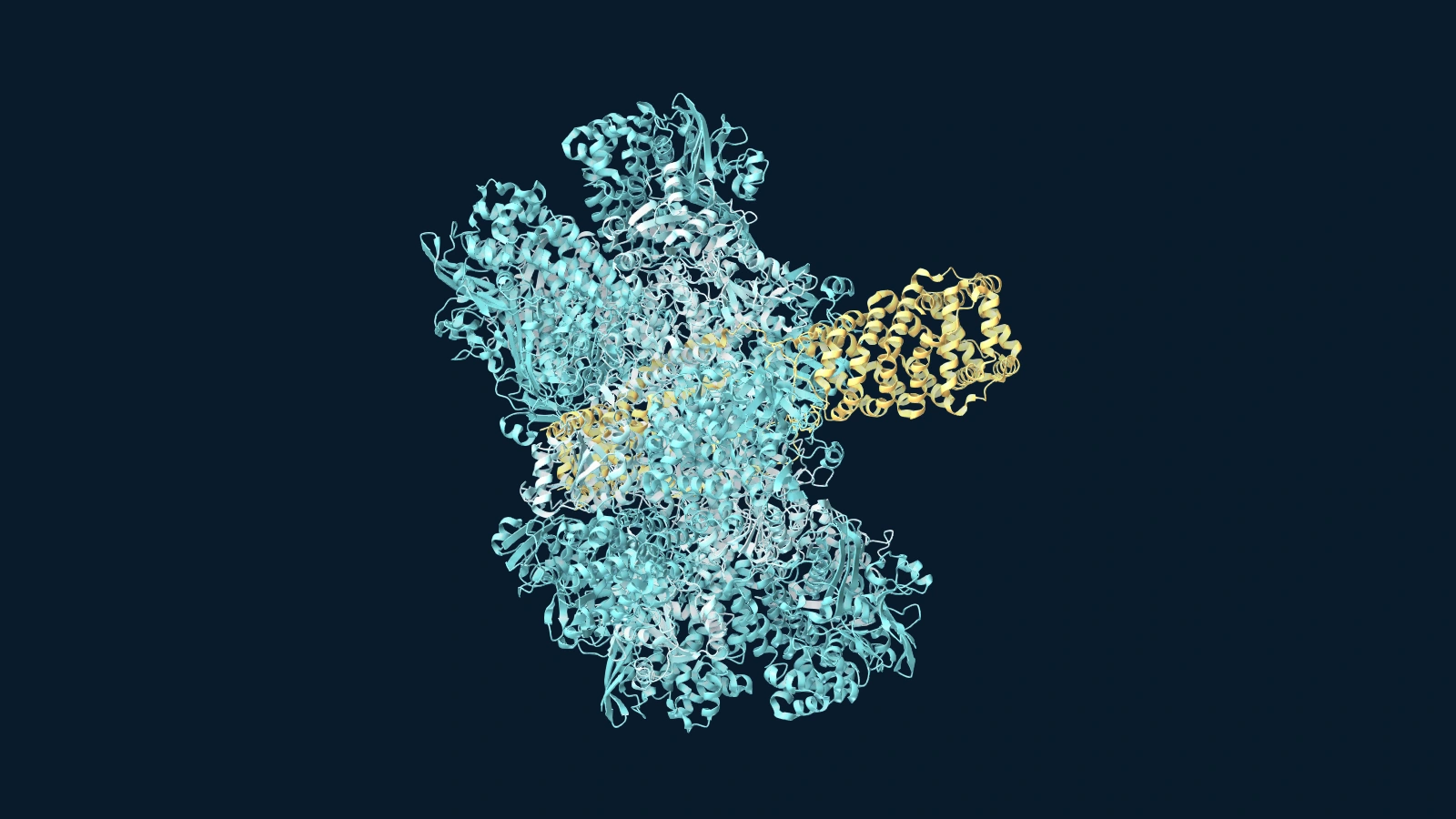
Splitting hydrogen at the nickel–iron centre releases electrons and protons. Unless something can accept those electrons, there is nowhere for the reaction to go. In Huc, iron–sulfur clusters provide intermediate stations. The eventual recipient is menaquinone, a molecule that normally sits in the cell membrane and can carry electrons along the respiratory chain. The respiratory-chain experiments distinguish the ways the two hydrogenases participate in this metabolism. It is Huc, not a generic stand-in for every hydrogenase, whose structure is described here.
Look at the stalk-focused reconstruction and there is a geometric puzzle. The catalytic head stands away from the membrane. The electron acceptor is usually in the membrane. How can they meet? The researchers identified a central stalk and proposed that it lets menaquinone travel from the membrane to a reduction site some 94 ångströms away. That is a route for a relatively large carrier molecule, distinct from the narrow gas passages leading to the metal centre. Confusing the two would send hydrogen on the wrong journey.
Respiration puts these molecular events in context. Electrons passed along a respiratory chain can help establish the membrane gradient used by ATP synthase. The two enzymes do different jobs. Huc gives the chain a supply of electrons; it is not itself a miniature rotary ATP factory. Nor was a useful air-powered battery demonstrated by the structural study. Getting a measurable current from hydrogen and delivering useful power continuously are different engineering targets.
The ecological claim is both more modest and more interesting. For a soil bacterium short of food, the relevant comparison is not with a power station. It is with having no supplementary source of electrons at all. The atmosphere does not have to offer much hydrogen if an enzyme can keep working almost to the last molecule.