In 1897, liquid squeezed from yeast continued turning sugar into alcohol even after the intact cells were removed. A century later, researchers were explaining an enzyme that works through rotation. In the following decades, other enzymes became tools for copying, repairing and rewriting DNA.
These are chapters of the same scientific story. Enzymes, biological catalysts that accelerate chemical reactions, have repeatedly forced researchers to reconsider what life is made of and how it works. Most are proteins, but some are RNA. They have featured prominently in Nobel Prizes in both Chemistry and Physiology or Medicine.
The prizes went to people and discoveries. Sometimes the centrepiece was one enzyme; sometimes it was a whole pathway, a regulatory mechanism or a method built around catalysis. Following that distinction makes the history more revealing than a list of famous molecules.
From a mysterious activity to a molecule you could study
Buchner’s cell-free fermentation challenged the idea that this transformation required an intact living organism. But the yeast extract was a mixture. The next challenge was to identify its components and learn how enzymes cooperate with other molecules.
Urease brought a different kind of clarity. Sumner obtained crystals of an active enzyme in 1926, two decades before his Nobel Prize. Studying isolated proteins made it possible to ask concrete questions about their composition, structure and catalytic behaviour. That work also established a habit that still defines enzymology: purify the activity, then test what the purified material can do.
1907–1947: bringing life’s chemistry into the laboratory
1907 · Chemistry — Eduard Buchner. Yeast extracts fermented sugar without intact living yeast cells. The activity called zymase was the work of an enzyme system, not a single purified enzyme. A process associated with life could be studied as chemistry in a test tube.
1929 · Chemistry — Arthur Harden and Hans von Euler-Chelpin. Their studies of sugar fermentation showed how enzymes work with phosphate and small chemical partners. Cozymase, later identified as NAD, helped establish the importance of coenzymes: helpers that participate in reactions but are not themselves protein enzymes.
1931 · Medicine — Otto Warburg. His work on the respiratory enzyme connected oxygen use to an iron-containing catalyst. This helped turn cellular respiration from a general observation into a problem of identifiable molecular chemistry.
1946 · Chemistry — James B. Sumner, John H. Northrop and Wendell M. Stanley. Sumner
crystallized jack bean urease, which breaks down urea. Northrop purified digestive enzymes including pepsin, trypsin and chymotrypsin. Their work established that enzymes could be isolated and investigated as proteins. Stanley’s part of the shared award concerned virus preparations.
1947 · Medicine — Carl and Gerty Cori, sharing the prize with Bernardo Houssay. The Coris traced the catalytic conversion of glycogen, the body’s stored carbohydrate, with glycogen phosphorylase central to their experiments. Houssay’s separately recognised work concerned hormonal control of sugar metabolism.
1955–1972: connecting genes, structure and activity
1955 · Medicine — Hugo Theorell. Studies of oxidation enzymes—including flavin-containing enzymes and alcohol dehydrogenase—revealed how a protein and its chemical partners cooperate. Enzyme function depended on molecular organisation, not simply on the presence of a reactive ingredient.
1958 · Medicine — George Beadle and Edward Tatum, sharing the prize with Joshua Lederberg. Mutant fungi linked particular genes to particular biochemical steps, producing the influential one-gene–one-enzyme idea. Modern biology has refined that simple formulation. Lederberg’s distinct share recognised bacterial genetics.
1959 · Medicine — Severo Ochoa and Arthur Kornberg. Kornberg’s DNA polymerase work and Ochoa’s studies of enzymatic RNA synthesis made nucleic-acid construction experimentally accessible. Ochoa’s enzyme, polynucleotide phosphorylase, can build RNA under laboratory conditions; it should not be confused with the template-reading RNA polymerases that transcribe genes.
1965 · Medicine — François Jacob, André Lwoff and Jacques Monod. The question expanded from what an enzyme does to when a cell makes it. Work on genetic regulation, including the lactose system and its enzyme β-galactosidase, showed that enzyme production responds to biological needs. The shared award also recognised control of virus synthesis.
1972 · Chemistry — Christian Anfinsen, Stanford Moore and William H. Stein. Ribonuclease A, an RNA-cutting enzyme, became a powerful model. Anfinsen connected amino-acid sequence to recovery of an active folded structure under appropriate conditions. Moore and Stein connected chemical structure to the unusual reactivity of the enzyme’s active site.
Why molecular shape changed the story
Ribonuclease A linked two questions that had often been treated separately: how a chain of amino acids adopts a particular shape, and how that shape produces a chemical reaction. Cornforth’s work added another level of precision. An enzyme does not merely bring ingredients together; it can control which atoms move and which three-dimensional product appears.
That idea remains central to modern research on selective enzyme catalysis. A structure is a valuable clue, but experiments are still needed to establish the reaction, its speed and its selectivity.
1975–1993: enzymes become tools—and RNA becomes an enzyme
1975 · Chemistry — John Cornforth, sharing the prize with Vladimir Prelog. Cornforth used labelled atoms to follow the precise three-dimensional choices enzymes make during reactions. Enzymes could distinguish positions that look equivalent in a flat chemical drawing. Prelog’s share concerned stereochemistry more broadly.
1975 · Medicine — David Baltimore, Renato Dulbecco and Howard Temin. Baltimore and Temin independently identified reverse transcriptase: an enzyme that copies RNA into DNA. The shared prize concerned tumour viruses and cellular genetic material; Dulbecco’s contribution was not the same enzyme discovery.
1978 · Medicine — Werner Arber, Daniel Nathans and Hamilton O. Smith. Restriction enzymes made DNA experimentally manageable by cutting it at defined sites. Arber established the biological principles, Smith characterised a sequence-specific enzyme, and Nathans pioneered applications. DNA could now be dissected and mapped with chemical tools.
1989 · Chemistry — Sidney Altman and Thomas R. Cech. Catalytic RNA overturned the assumption that every enzyme must be a protein. Altman’s work concerned RNase P; Cech’s concerned self-splicing RNA. These were distinct discoveries showing that RNA can perform chemistry as well as carry information.
1992 · Medicine — Edmond H. Fischer and Edwin G. Krebs. Protein kinases and phosphatases add and remove phosphate groups. Their discoveries established reversible phosphorylation as a major means of regulating proteins. An enzyme’s activity can be controlled by another enzyme.
1993 · Chemistry — Kary B. Mullis and Michael Smith. PCR repeatedly uses a DNA polymerase to amplify a chosen DNA region; heat-stable polymerases made routine cycling practical. Smith’s site-directed mutagenesis work enabled deliberate changes in genes and the proteins they encode. The award recognised methods, not the discovery of Taq polymerase.
The surprise that changed the definition of an enzyme
The 1946 and 1989 prizes form an especially striking pair. Purified protein enzymes helped explain catalysis in molecular terms. Decades later, catalytic RNA showed that protein was not a requirement for every biological catalyst.
RNase P and self-splicing RNA did not make protein enzymes less important. They expanded the possibilities. RNA could store sequence information and perform chemistry, a combination that also gave researchers a powerful new way to think about early life. The discovery supports experiments and hypotheses about life’s origins; it does not, by itself, reconstruct how life began.
Today’s polymerase tools continue the other branch of this history. Their practical performance depends on the template, the reaction conditions and the enzyme formulation, as discussed in the guide to long-range DNA polymerases.
1997–2009: molecular machines inside living cells
1997 · Chemistry — Paul D. Boyer, John E. Walker and Jens C. Skou. Boyer and Walker explained how ATP synthase makes ATP through coupled molecular changes and rotation. Skou’s half of the prize recognised the sodium–potassium ATPase, which uses ATP to pump ions. Two different machines connected chemical energy to physical work.
2001 · Medicine — Leland H. Hartwell, Tim Hunt and Paul Nurse. Cell-cycle research identified cyclin-dependent kinases and their cyclin partners as key regulators of cell division. The kinases are enzymes; cyclins are their regulatory partners. The award covered the control system, not just one catalyst.
2004 · Chemistry — Aaron Ciechanover, Avram Hershko and Irwin Rose. A sequence of E1, E2 and E3 enzymes helps attach ubiquitin to selected proteins, marking many of them for destruction. Ubiquitin is the tag, not an enzyme. The proteasome then carries out controlled protein breakdown.
2006 · Chemistry — Roger D. Kornberg. Detailed structures of RNA polymerase II revealed how a eukaryotic enzyme copies DNA information into RNA. This was a close view of a working molecular assembly, extending the earlier history of nucleic-acid enzymes into the mechanics of transcription.
2009 · Chemistry — Venkatraman Ramakrishnan, Thomas A. Steitz and Ada E. Yonath. Structures of the ribosome explained the machinery that builds proteins. Its peptide-bond-forming centre is based on RNA. The ribosome is a large RNA–protein assembly, providing another important example of RNA at a catalytic heart.
2009 · Medicine — Elizabeth H. Blackburn, Carol W. Greider and Jack W. Szostak. Telomerase extends the repetitive DNA at chromosome ends using an internal RNA template. Its catalytic protein is a reverse transcriptase. The discovery connected chromosome protection to a distinctive enzyme complex; it did not establish a simple way to reverse human ageing.
2015–2020: repairing, evolving and programming chemistry
2015 · Chemistry — Tomas Lindahl, Paul Modrich and Aziz Sancar. Enzyme systems continually repair DNA. Lindahl investigated base excision repair, Modrich mismatch repair, and Sancar nucleotide excision repair. The work revealed coordinated molecular maintenance, involving specialised recognition, cutting, rebuilding and sealing steps.
2018 · Chemistry — Frances H. Arnold, sharing the prize with George P. Smith and Gregory P. Winter. Arnold’s directed evolution of enzymes uses variation and selection to improve useful properties, with subtilisin among the early examples. Smith and Winter’s half concerned phage display of peptides and antibodies. Their contribution should not be relabelled as the same enzyme work.
2019 · Medicine — William G. Kaelin Jr, Peter J. Ratcliffe and Gregg L. Semenza. Oxygen-dependent prolyl hydroxylases help control the fate of HIF, a regulator of gene expression. Their chemistry connects oxygen availability to a cellular response. This was a prize for the oxygen-sensing system, with enzymes central to its operation.
Emmanuel Charpentier and Jennifer A. Doudna. CRISPR–Cas9 turned a bacterial defence enzyme into a programmable tool. A guide RNA directs Cas9 to a matching DNA region, subject to sequence requirements. Cutting DNA and obtaining a desired genetic edit are separate steps: cellular repair and experimental design help determine the outcome.
The wider Nobel map: pathways, signalling and research tools
Other major prizes belong alongside that central chronology. Their subjects included enzyme networks, the molecules that support catalysis, or broader biological systems in which enzymes play essential roles.
- 1922 · Medicine — Archibald V. Hill and Otto Meyerhof: Muscle heat, oxygen use and lactic-acid metabolism helped frame the biochemical study of energy conversion.
- 1937 · Medicine — Albert Szent-Györgyi: Biological oxidation, vitamin C and fumaric-acid chemistry connected small molecules to enzyme-driven metabolism.
- 1953 · Medicine — Hans Krebs and Fritz Lipmann: The citric acid cycle is a network of enzyme reactions; coenzyme A is a molecular carrier used by enzymes, not an enzyme itself.
- 1957 · Chemistry — Alexander Todd: Nucleotides and nucleotide coenzymes supplied essential chemical understanding of the molecules enzymes build, recognise and use.
- 1961 · Chemistry — Melvin Calvin: Carbon tracing mapped photosynthetic carbon assimilation, an enzyme network that includes the carbon-fixing catalyst Rubisco.
- 1964 · Medicine — Konrad Bloch and Feodor Lynen: Cholesterol and fatty-acid metabolism revealed coordinated enzyme pathways and their regulation.
- 1970 · Chemistry — Luis Leloir: Sugar nucleotides explained how activated sugar units participate in enzyme-catalysed carbohydrate construction.
- 1971 · Medicine — Earl W. Sutherland Jr: Cyclic AMP signalling linked hormones to enzyme activity, including adenylyl cyclase, which makes the messenger.
- 1978 · Chemistry — Peter Mitchell: Chemiosmotic theory supplied the energy framework for membrane processes that drive ATP synthesis; it was not a separate discovery of ATP synthase.
- 1980 · Chemistry — Paul Berg, Walter Gilbert and Frederick Sanger: Recombinant DNA and sequencing transformed molecular biology. Berg’s DNA manipulation and Sanger’s enzymatic sequencing relied on enzymes; Gilbert’s sequencing chemistry followed a different route.
- 1982 · Medicine — Sune K. Bergström, Bengt I. Samuelsson and John R. Vane: Prostaglandin research connected lipid chemistry to enzyme action, including the inhibition of prostaglandin production by aspirin.
- 1984 · Chemistry — Bruce Merrifield: Solid-phase chemical synthesis made peptides and proteins, including a synthetic ribonuclease, accessible by a new route. The awarded synthesis method was not itself an enzyme.
- 1988 · Medicine — James W. Black, Gertrude B. Elion and George H. Hitchings: New principles of drug development included selective inhibition of metabolic enzymes in Elion and Hitchings’s work. Black’s contribution centred on receptor-blocking medicines.
- 1989 · Medicine — J. Michael Bishop and Harold E. Varmus: Discovering the cellular origin of viral oncogenes opened the biology of cancer genes. The Src protein in this history is a protein tyrosine kinase.
- 1994 · Medicine — Alfred G. Gilman and Martin Rodbell: G proteins connected receptors to cellular responses. Their GTP-hydrolysing components act as molecular switches that regulate enzymes and other targets.
- 1998 · Medicine — Robert F. Furchgott, Louis J. Ignarro and Ferid Murad: Nitric oxide signalling connected a gaseous messenger to the enzyme guanylyl cyclase. Nitric oxide itself is a small molecule, not an enzyme.
- 2002 · Medicine — Sydney Brenner, H. Robert Horvitz and John E. Sulston: Programmed-cell-death genetics identified a pathway including the CED-3 protease, a member of the caspase family. The award also covered organ development.
- 2006 · Medicine — Andrew Z. Fire and Craig C. Mello: RNA interference revealed sequence-directed gene silencing. Enzymes such as Dicer and Argonaute became central to explaining its molecular machinery.
- 2013 · Chemistry — Martin Karplus, Michael Levitt and Arieh Warshel: Multiscale computer models combined descriptions of reacting atoms with their larger molecular surroundings, creating powerful approaches to enzyme mechanisms. This was a prize for modelling methods.
- 2016 · Medicine — Yoshinori Ohsumi: Autophagy research uncovered cellular recycling machinery that includes enzyme-driven conjugation systems. Autophagy is a process, not the name of one enzyme.
- 2024 · Chemistry — David Baker, Demis Hassabis and John Jumper: Protein design and structure prediction broadened the tools available to enzyme research. This was a wider protein-science award: a predicted fold alone does not demonstrate catalytic activity.
A history of changing questions
The progression is remarkable. Scientists first asked whether life’s chemistry could continue outside a living cell. Then they asked what an enzyme was made of, how its shape controlled a reaction, how cells regulated it, and whether the catalyst had to be a protein at all.
Later work showed how enzymes could become laboratory tools, how evolution could improve them, and how an RNA guide could help program where one acts. Computational design now adds another route to new proteins. Across this history, the decisive step remains experimental: showing that a molecule performs the proposed chemistry.
About the molecular illustration
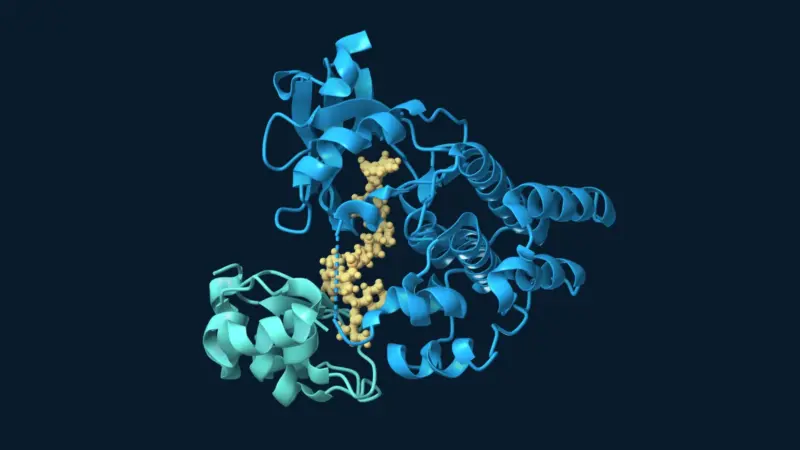
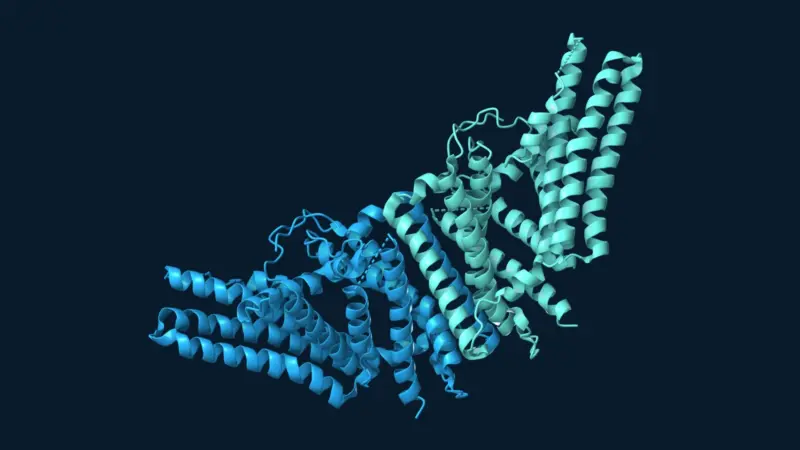
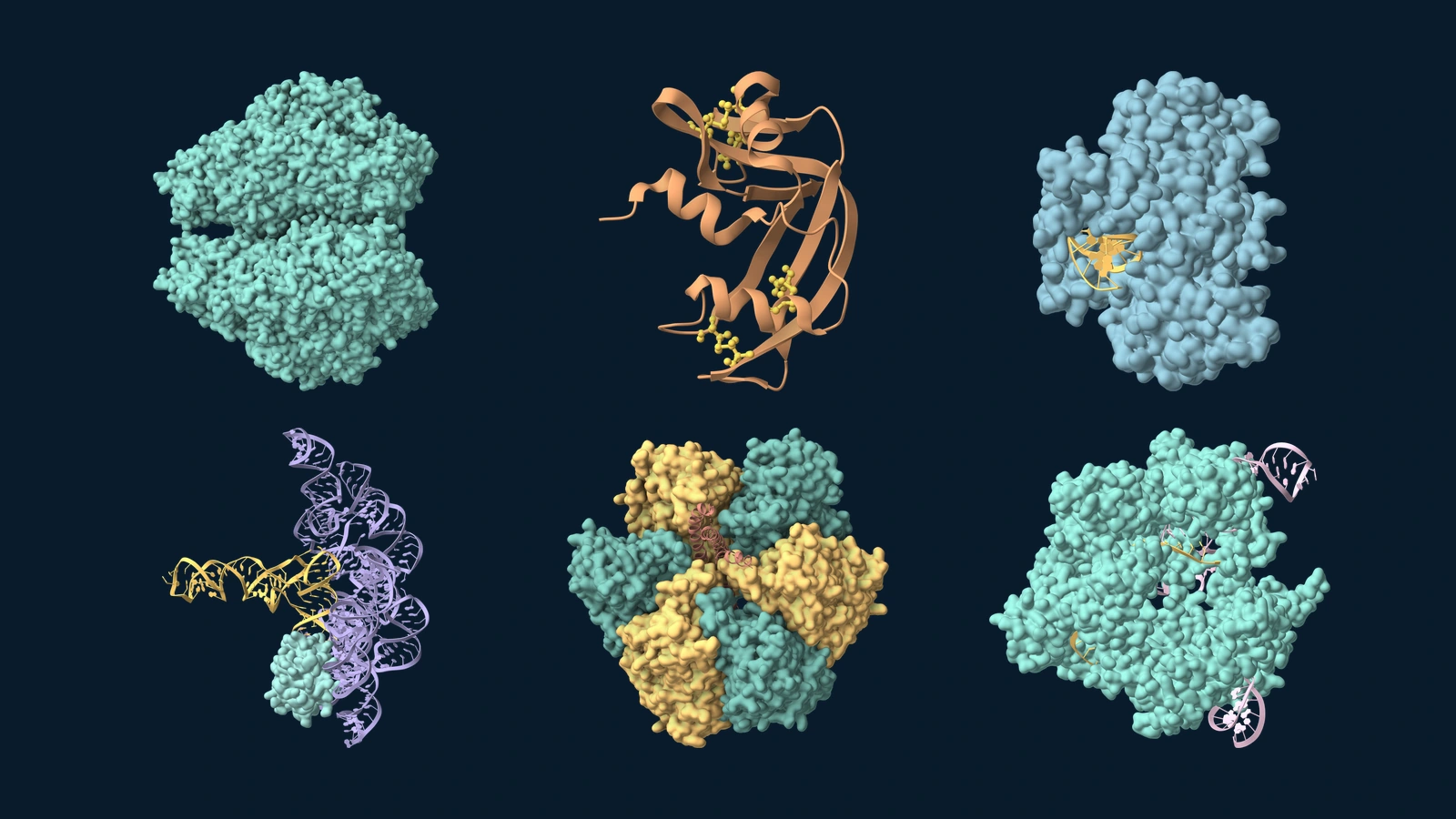
The original illustration presents six structural portraits associated with milestones in this history: jack bean urease (3LA4), bovine ribonuclease A (7RSA), the EcoRI–DNA complex (1ERI), bacterial RNase P with tRNA (3Q1Q), the bovine F₁-ATPase head (1BMF), and a Cas9–RNA–DNA complex (4OO8).
The years identify Nobel milestones, not the dates when these particular structures were measured. EcoRI is a representative restriction enzyme; it is not Smith’s original HindII enzyme. The ATPase portrait shows the F₁ head, not the full membrane motor or the sodium–potassium pump. The Cas9 structure is a mutated structural construct, not an image of DNA being cut. The RNase P complex is from Thermotoga maritima, a later structural example of the catalytic-RNA principle.
Colours distinguish molecular components; they do not show measured activity or confidence. The portraits are enlarged separately for readability and are not to a common scale. Water and most small molecules are omitted. The geometry comes from deposited experimental coordinates and was rendered with Mol*, then assembled into this editorial composition.
Sources and scope
Each linked year leads to the official Nobel Prize record. The chronology follows major awards directly centred on enzyme discoveries, mechanisms, regulation or catalytic tools, followed by a wider map of related discoveries. It is not a catalogue of every Nobel-winning experiment that happened to use an enzyme. Award years and research dates are different; shared awards can recognise distinct contributions.
- Nobel Foundation: the discovery of catalytic RNA.
- Royal Swedish Academy of Sciences: enzyme stereochemistry.
- Nobel Assembly: telomeres and telomerase.
- Royal Swedish Academy of Sciences: the scientific background to CRISPR–Cas9.
- Royal Swedish Academy of Sciences: protein design and structure prediction.
- Structural sources and original papers are linked from the six PDB entries above. Rendering software: Sehnal et al. (2021), Mol* Viewer: modern web app for 3D visualization and analysis of large biomolecular structures. Coordinate data: RCSB PDB usage policy.