Health
Experimental Acne Vaccine Reduces Skin Inflammation in Mice
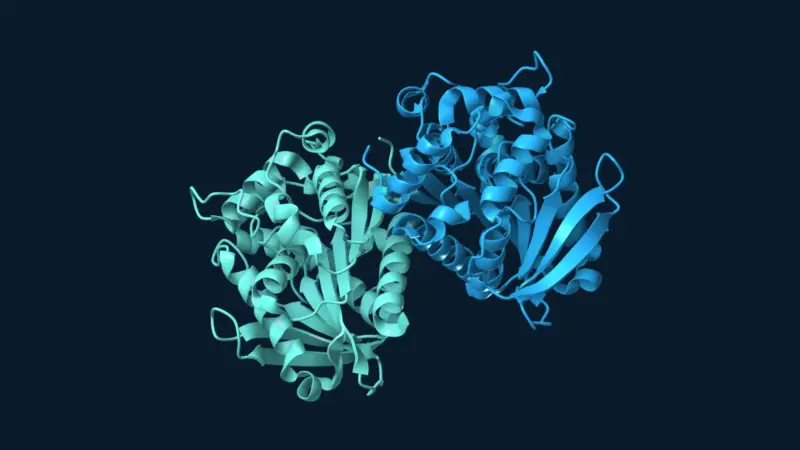
An experimental acne vaccine reduced skin inflammation in mice by targeting an enzyme made by certain strains of Cutibacterium acnes.
The science of enzymes. The possibilities they create.
Explore EnzymeNews
Browse the complete EnzymeNews collection of research reports and explainers, from enzyme mechanisms and medical research to recycling, industrial biocatalysis and AI tools.
Choose a topic, follow a research path below, or browse the stories by their original publication date. Dated update notes explain substantial revisions to older reports. Each article links to its evidence and distinguishes experimental findings from established applications.
36 results
An experimental acne vaccine reduced skin inflammation in mice by targeting an enzyme made by certain strains of Cutibacterium acnes.
An evolutionary comparison suggests that Rubisco has gradually improved its performance in C₃ flowering plants. The findings offer clues for enzyme engineering, but crop-yield gains…
A study involving EvoEnzyme used FuncLib to redesign peroxygenases, creating variants with different product preferences and substrate-specific performance gains.
Cells and enzymes depend on one another today. RNA catalysts, chemical networks and protocell experiments offer clues to how that relationship could have begun.
Boosting a worm counterpart of G3PP improved movement with age and extended lifespan under excess glucose. Researchers traced a link to cellular recycling, with limits…
Living cells make many useful chemicals, but keeping those cells alive also adds work to a manufacturing process.
AlphaFold 2 helps researchers explore enzyme structures and plan experiments. Confidence scores and biological context determine what a prediction can usefully tell us.
Long-fragment PCR claims depend on the starting DNA and exact formulation. This updated guide explains what six suppliers' specifications do—and do not—establish.
A study links ceramide production to muscle ageing and tests an enzyme target in cells and animals. Later research shows why the exact target and…
Marine microbes experience temperature swings, not just yearly averages. A study links that thermal history to enzyme properties and the flexibility of bacterial growth.
Researchers redesigned a sea anemone protein to break down tiny PET particles. The 2023 laboratory study points towards possible water-treatment applications, with important limits.
A 2023 study improved chiral alcohol synthesis by engineering enzymes inside protein cages. The results show why an enzyme's surroundings can change which mutations help.