Bite into a chocolate-covered cherry and syrup can spill from a shell with no obvious hole. How did anyone get the liquid inside? One answer is that nobody did. The confectioner coated a filling firm enough to handle. The syrup developed afterwards.
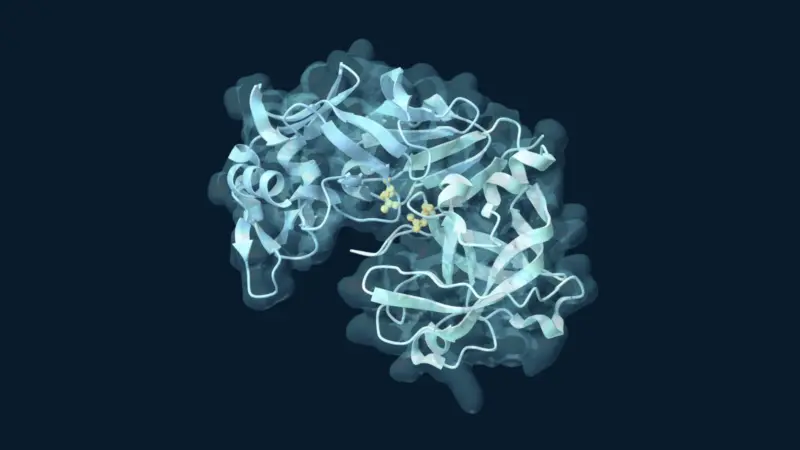
The ingredient that makes this possible is invertase, an enzyme that splits table sugar. In the technique described in the confectioner’s account of cherry cordials, fondant surrounds the cherry before the chocolate goes on. Enzyme action and moisture from the fruit help turn the centre liquid over time. Other methods of making filled chocolates exist. What is distinctive about this one is the reversal of the usual manufacturing problem: the material on the production line and the filling you eat are meant to be different.
The sugar that gives fondant its body
Fondant looks fairly uniform, but at the scale of a sugar crystal it contains two quite different materials. Fine sucrose crystals sit in concentrated sugar solution. The crystals help give the paste enough body to hold its shape; the liquid between them matters to how easily it flows. Control that balance and a filling can be solid enough to dip when it is first made and soft enough to run when the customer opens it.
Invertase acts on sucrose dissolved in that liquid. A sucrose molecule consists of glucose joined to fructose. The enzyme helps break the bond using water, releasing the two smaller sugars. Each molecule converted is one fewer molecule of sucrose available to join a sucrose crystal. As the composition of the liquid changes, some of the existing crystals can dissolve. Glucose and fructose do not simply rebuild the same sucrose crystals that gave the fondant its stiffness.
It is easy to describe what follows as the filling melting. That suggests adding heat, as one might to melt a chocolate bar, but a cordial does not need a second trip through the tempering machine to soften its centre. Chemistry is changing the proportion and identity of the sugars at a given temperature. Nor has invertase made the sugar disappear; the sweet dissolved products remain inside the shell.
A texture test, not just a trick of the tongue
In 2019, Özge Özcan and colleagues put a practical part of the story to the test. In the fondant experiment, they made batches from sucrose, glucose syrup and water. Some received invertase at concentrations from 0.1% to 0.5%; a control received none. They followed the fillings over one, two and four weeks. No cherries or chocolate shells were involved. That simplification gave them a way to examine the centre itself.
They measured individual sugars by chromatography, separating compounds that would all register merely as “sweet” to a casual taster. They also used a probe to measure the force needed to deform the samples. The control grew harder across storage. Enzyme-treated samples were softer, and the measurements of how the material deformed agreed in direction with the hardness tests. The precise readings belong to this formulation and testing apparatus; grams reported by a texture analyser describe a force measurement, not the weight of sugar that vanished.
The investigators also pointed out a complication: the enzyme preparation itself was added in solution. Extra liquid can affect softness too. The case for enzyme action is stronger when a texture change is read alongside the shift in the sugar composition, rather than attributed to chemistry from a softer bite alone. The primary paper and data tables let a reader check these two kinds of observation separately. They do not establish how long any particular commercial cordial needs to mature.
Why yeast has a confectioner’s enzyme
For yeast the payoff is access to sugars, not a softer centre. Sucrose arrives as a linked pair; hydrolysis yields smaller molecules the organism can use. This is distinct from fermentation, a process involving several enzymes that can turn sugars into products including alcohol. The distinction appears in EnzymeNews’s account of cell-free fermentation: chemistry can continue after the cells are gone, but that does not make one enzyme responsible for a whole pathway. A chocolate filling does not need a culture of live yeast making alcohol to achieve this effect.
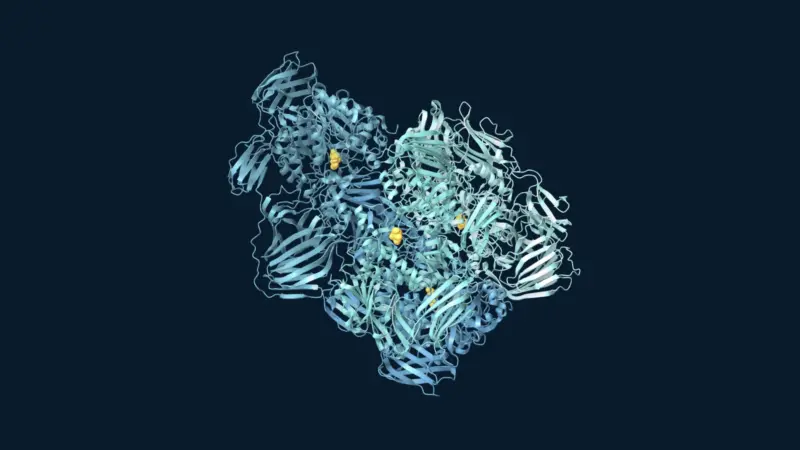
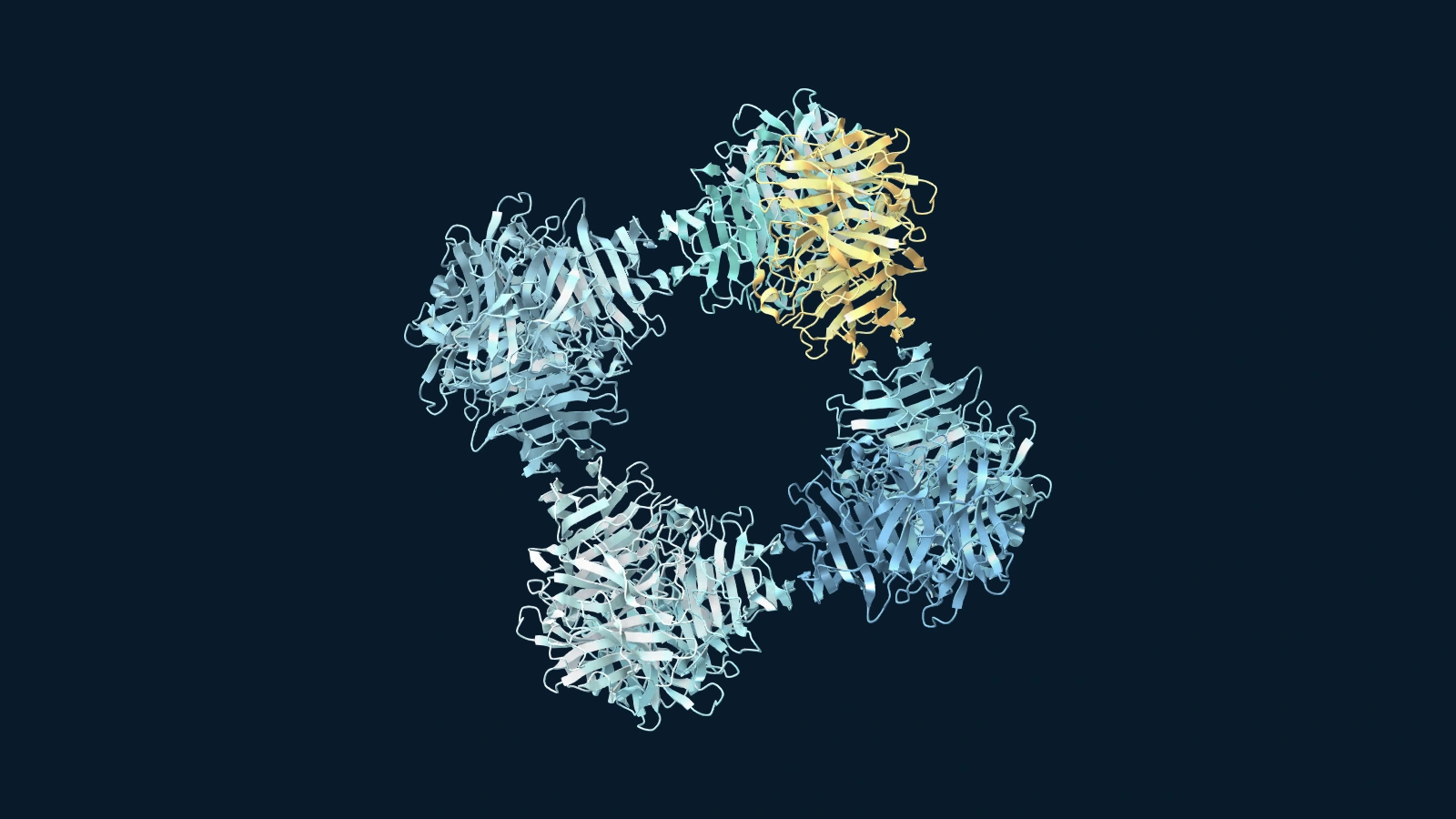
The yeast invertase study reveals another surprise. The recombinant enzyme from Saccharomyces cerevisiae forms an assembly of eight subunits, arranged in four pairs. How the subunits fit together shapes access to the catalytic pocket. Work with different sugars, interpreted alongside the original structural coordinates, linked that architecture to why short sugars can reach the pocket more readily than longer chains. It would be a mistake to conclude that the particular enzyme preparation used in the fondant experiment was identical to that crystallised protein; the two studies answer different questions.
For a confectioner, time itself is an ingredient. Too little change before eating, and the centre remains much like the paste that was coated. Too much change before coating, and the centre loses the very firmness that made it easy to handle. What invertase offers is a way to put those requirements on opposite sides of the moment when the chocolate sets.
Sources and further reading
- Greweling and the Culinary Institute of America (2012). Cherry Cordials. Chocolates and Confections, 2nd edition.
- Özcan et al. (2019). The effect of invertase concentration on quality parameters of fondant. Journal of Food Science and Technology.
- Özcan et al. (2019). Full paper and data tables. Journal of Food Science and Technology.
- Sainz-Polo et al. (2013). Three-dimensional structure of Saccharomyces invertase: role of a non-catalytic domain in oligomerization and substrate specificity. Journal of Biological Chemistry.
- Protein Data Bank. 4EQV, yeast invertase.
- EnzymeNews. The Enzymes Behind a Century of Nobel Prizes.