Researchers have reported a new method for collagen crosslinking using manganese oxide nanoparticles that mimic an enzyme’s catalytic activity. In laboratory experiments, the treatment helped isolated rat-tail tendon resist digestion by collagenase, an enzyme that breaks down collagen.
The study, first published in Chemical Science in August 2024, explored a possible way to make collagen-based biomaterials more durable. Its findings concern purified collagen and isolated tissue; they do not establish the safety or effectiveness of a medical treatment.
How the collagen crosslinking method works
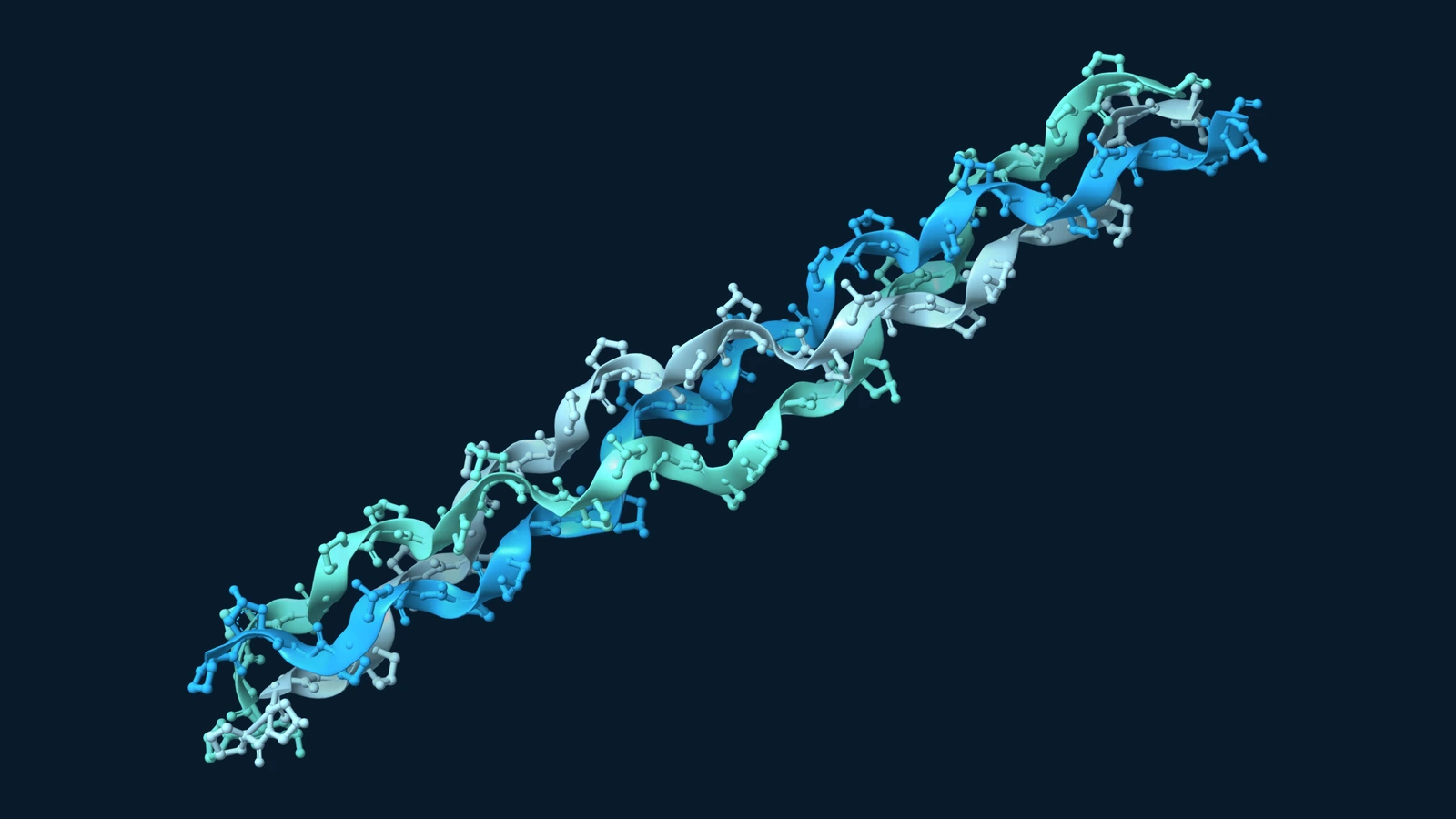
Collagen provides structural support in connective tissues and is widely investigated as a material for tissue repair. One challenge is controlling how quickly collagen-based materials break down. Crosslinking creates connections between collagen molecules that can help stabilize the material.
Adarsh P. Fatrekar, Rasmi V. Morajkar and Amit A. Vernekar investigated octahedral manganese oxide nanoparticles, designated MnN. These particles are made of Mn₃O₄ and act as an oxidase-like nanozyme: an artificial catalyst that uses oxygen to drive reactions resembling those performed by an enzyme.
Under mildly acidic conditions, MnN promoted reactions involving tannic acid and collagen that produced covalent crosslinks. The researchers used gel electrophoresis to examine the resulting linked collagen structures. Circular dichroism measurements also indicated that collagen’s characteristic triple-helical structure was largely preserved under the experimental conditions.
The study included experiments with another protein, bovine serum albumin, and with small molecules to investigate the catalyst’s reactions. Its detailed tests of resistance to enzymatic breakdown focused on collagen-rich rat-tail tendon.
What happened when collagenase was added?
The team treated isolated tendon with the nanozyme and tannic acid, then exposed it to collagenase. They assessed breakdown by measuring hydroxyproline, a component of collagen, released into the surrounding liquid.
With tannic acid at a concentration of 125 micromolar, the researchers reported complete protection in their 24-hour degradation assay. The treated tendon was also reported to remain intact after 48 hours of collagenase exposure.
The comparison treatments helped establish the importance of the combined reaction. Tannic acid alone, even at 150 micromolar, was associated with approximately 40% tendon degradation after 24 hours. MnN alone did not protect the tissue against collagenase.
Because free tannic acid can inhibit collagenase, the researchers also checked whether the enzyme in the reaction mixture could still digest fresh tendon. It could. That result supports protection of the crosslinked material rather than an explanation based solely on disabling collagenase.
What the results do—and do not—show
The findings support a method for improving collagen’s resistance to enzymatic degradation under defined laboratory conditions. They do not demonstrate permanent protection, improved mechanical strength, faster wound healing or clinical safety.
The authors proposed that chemical modifications near sites recognized by collagenase, together with reduced swelling, could make the tissue harder for the enzyme to attack. This is a proposed explanation for the observed resistance, rather than a fully resolved mechanism.
For biomedical development, further work would need to examine tissue responses, the fate of the nanoparticles, mechanical performance and degradation over longer periods. The appropriate degree of stability would also depend on the intended application. The study provides a starting point for that work, rather than a ready-to-use implant or wound treatment.
Original research
- Fatrekar, A. P., Morajkar, R. V. and Vernekar, A. A. (2024). “Expanding limits of artificial enzymes: unprecedented catalysis by an oxidase nanozyme in activating a structural protein for covalent crosslinking and conferring remarkable proteolytic resistance.” Chemical Science, 15, 14726–14738. DOI: 10.1039/D4SC03767G.
Related enzyme research: How citrate synthase forms fractal triangles.